Deep Dive:
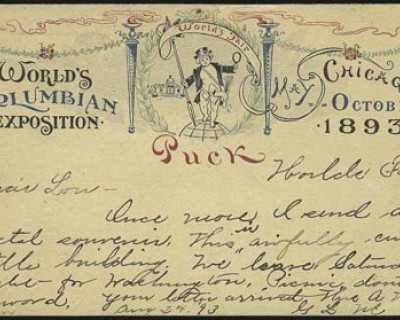
World’s Fair Puck
In 1893, Chicago put on a fair that would awe the world. The World’s Columbian Exposition, so called in honor of the 400th anniversary of Christopher Columbus’s arrival in the New World, displayed the most fascinating innovations and arts of the period in one grand place. The fair organizers envisioned a 630-acre park, designed by Frederick Law Olmsted of New York Central Park fame, filled with bone-white neoclassical buildings by such eminent architects as Henry Ives Cobb, Richard Morris Hunt, Charles McKim, and Louis Sullivan.
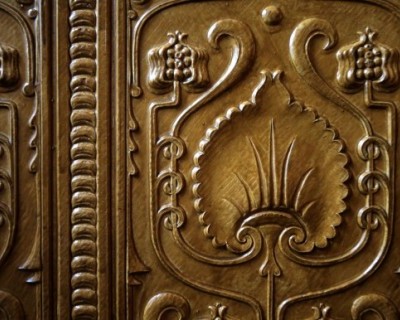
“The Most Perfect and Beautiful of All Wall Decorations”
Standing on the shoulders of the Industrial Revolution, the Gilded Age spawned an astounding number of inventions that profoundly changed life inside the American household. Those last few decades of the 19th century will always be known as a great era of invention.

New York’s Historic Puck Building
This post is part of a series exploring the stories behind the Driehaus Museum’s latest exhibition, With a Wink and a Nod: Cartoonists of the Gilded Age.
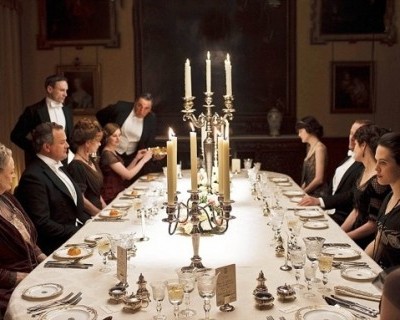
The Manners of the Edwardian Era
Queen Victoria’s son, Edward VII, had a brief reign from 1901 to 1910, but it was a decade marked by peace and prosperity at the height of the British Empire. The Edwardian period was indeed a “Gilded Age,” both in England and America.
The Story of the Fishers
In the early decades of the 20th century, the fictional Crawley family of Downton Abbey® hosted grand dinners and fretted about the Great War. At the same time, the real Fisher family was doing the same—right here in this Gilded Age mansion the Driehaus Museum calls ‘home.’

Changing Times: A Cultural Snapshot of the Edwardian Era
When you see the fashions on display in Dressing Downton™: Changing Fashion for Changing Times, you step into a broader cultural tale about the vast changes sweeping the world in the first decades of the 20th century.
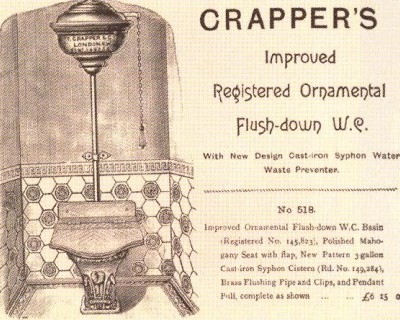
[You Asked] What’s the Story with the Crappers?
You Asked… What’s the Story with the “Crapper” Toilets in the Driehaus Museum Bathrooms? Today’s blog post is part of an occasional series dedicated to answering visitors’ questions.
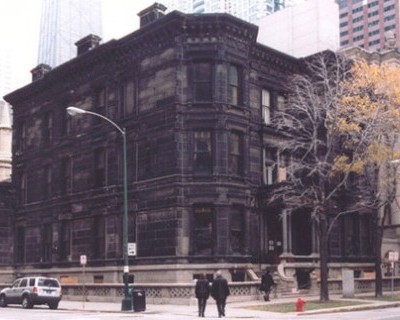
[From the Archives] Didn’t This Building Used to be Black?
Today’s blog is part of an occasional series dedicated to answering visitors’ questions.
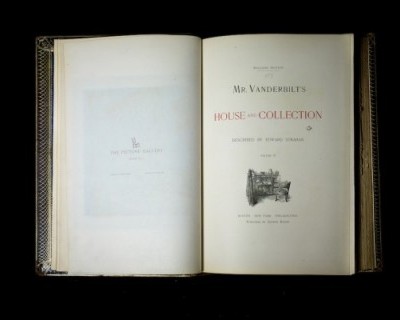
[New Acquisition] Mr. Vanderbilt’s House and Collection
Mr. Vanderbilt’s House and Collection (1884), a beautifully bound two-volume set that brings to life William H. Vanderbilt’s monumental “Brownstone Twins” and their contents on New York’s Fifth Avenue, is now on view in the Sculpture Gallery at the Driehaus Museum.
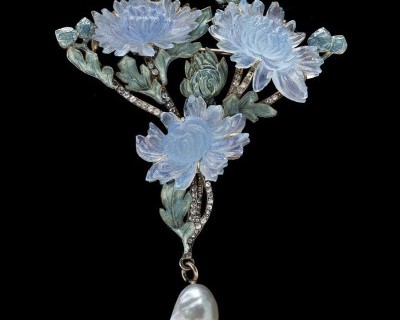
The Good, the Bad and the Ugly: Nature in Early 20th-Century Art Jewelry
Art, according to John Ruskin, the influential writer of the British Arts and Crafts movement, is most beautiful when its forms are derived from nature.
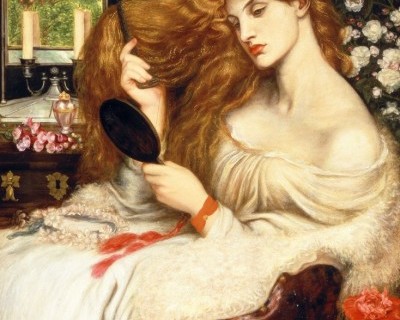
New Fashion, New Jewelry
Every piece of art jewelry on view in the Driehaus Museum’s latest exhibition, Maker & Muse: Women and Early 20th Century Art Jewelry, is a stunner in its own right. But this is not art in a vacuum; not jewelry for jewelry’s sake.
Christina M. Reade and the Lilac Festival Crown
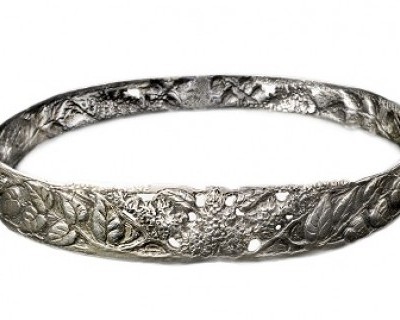
The elegant circlet is repossé silver, crafted from melted silver spoons donated by the women of Lombard, Illinois, in 1930. It was created as a symbol of Lilac Time, the annual springtime celebration in this west-suburban village. The crown adorned the first Lilac Festival Queen—whose name and the names of several other early Queens are etched in the crown’s interior—and continues to be an integral part of the festivities today.

Anniversary of the Tragic Ending for The Ship of Dreams
As we reflect today on the 103-year anniversary of a tragedy that shook an entire culture’s belief in its own bright, progressive destiny, some American teens have supposedly been surprised to discover that the RMS Titanic’s sinking was, in fact, real. (“I never knew titanic actually happened,” one tweeted. “Always thought it was just a film,” wrote another.)

Recognizing Influences and Appearance [The Arts and Crafts Movement]
On February 14, 2015, The Driehaus Museum will open an exhibit entitled Maker & Muse: Women and Early Twentieth Century Art Jewelry. This exhibition will focus on women as the creators of and inspiration for Arts and Crafts-style and Art Nouveau-style jewelry.
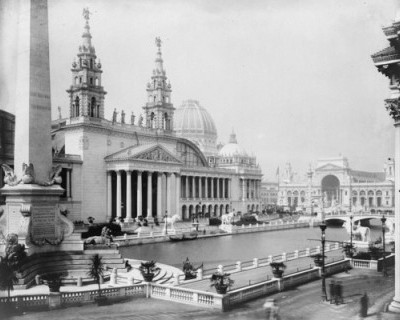
A Guide to Enjoying the World’s Colombian Exposition
The standard for the American mind, wrote M.G. Van Rensselaer, is to be “alive with mere curiosity as [much as] it is with a craving for instruction—pleased to look at anything, discontented only to think that other people are seeing things with which it cannot make acquaintance.”
Driehaus Museum Book Club Explores the History of Madame X
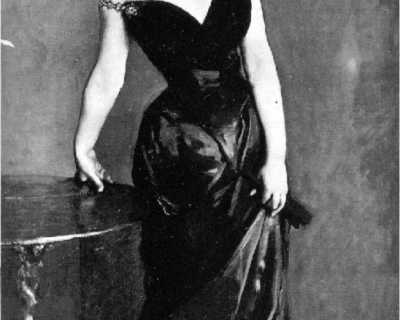
He originally titled it, Portrait of Madame ***, in an attempt to conceal his voluptuous sitter’s identity. As far as Paris society was concerned, the woman’s identity was far from the only asset the painting failed to cover.
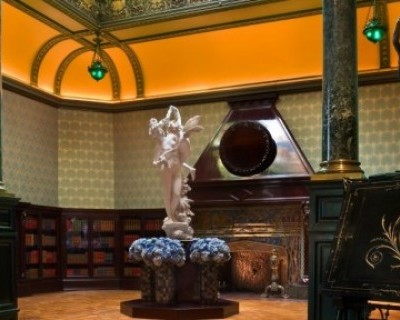
Interior Designers of the Nickerson Mansion: Robert E. Seyfarth
A young architect carved the distinctive lion heads on the lacquered-cherry wood fireplace mantel and the bookcases in the gallery of the Marble Palace. He was Robert E. Seyfarth, (Born 1878, Blue Island, Illinois) and an employee of both August Fiedler and George Washington Maher.
Interior Designers of the Nickerson Mansion: George W. Maher
Visitors to the Driehaus Museum often cite the gallery as a favorite room with its marvelous stained glass dome and massive wood-burning fireplace. Lined with lacquered cherry bookcases and featuring an iridescent mosaic tile Art Nouveau surround, it is the one room in the mansion that was completely redecorated in 1901 thanks to the second owner, Lucius George Fisher Jr.

Interior Designers of the Nickerson Mansion: William August Fiedler
“We strongly advocate the use of different styles in different rooms, to avoid the monotonous effect invariably produced by the fanatic apostles of the so-called Eastlake or Modern Gothic. For the same reasons it will be necessary for articles of luxury, as Easels. Hanging Shelves, Cabinets, etc., to use motifs from the Mooresque, Byzantine, Japanese, etc., though diametrically opposed to the prevailing style of the room.” – August Fiedler
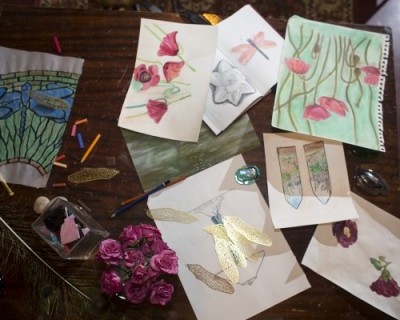
Susan Vreeland Visits the Museum
The Tiffany Girls faced their toughest critic since the old master himself during a recent twilight tour at the Driehaus Museum. Susan Vreeland, author of the acclaimed bestselling novel, Clara and Mr. Tiffany, was the featured speaker at the Driehaus Winter Book Club this March. She also gave two lectures at the museum on the Women’s Department at Tiffany Studios. Vreeland provided some valuable insights as she accompanied “Clara Driscoll” and “Agnes Northrop” on a historic reenactment through their temporary studio and showroom in the Nickerson Mansion.

Happy Birthday to Louis Comfort Tiffany!
Happy 166th Birthday to Louis Comfort Tiffany born February 18, 1848.
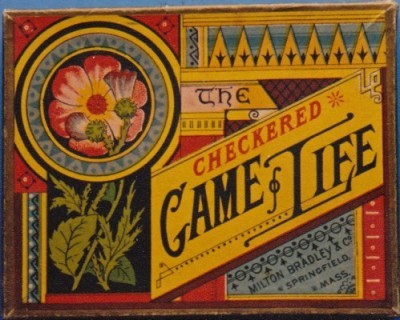
Gilded Age Games and Toys
As the Nickerson and Fisher families looked forward to their holiday seasons, they and other Gilded Age families would have enjoyed games, toys and books in their spare time.
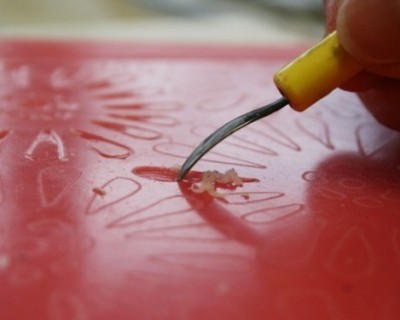
In Process: Creating Reproduction Low Art Tiles for the Museum Store
For the Museum Store, L’Esperance Tile was commissioned to craft two custom tiles inspired by the J. & J. G. Low Art Tile Works tiles found in the Driehaus Museum—which, with their embossed natural details, jewel-toned colors, and sheen, are among the most stunning surviving elements of the this 1883 mansion.
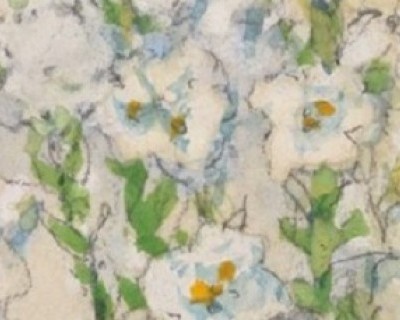
Tiffany and Chicago: The McCormick Windows
Cyrus H. McCormick was many things. A native Virginian who became one of Chicago’s great industrialists, he was also a famous penny-pincher, generous philanthropist, stolid Presbyterian, and patent hound. He moved to Chicago in 1847, where he set up the McCormick Harvesting Machine Company factory and prospered.

Luxurious Sport: Château de Chambord, France
The Driehaus Museum has three sister institutions in Europe, each simply resplendent and embodying the highest ideals of preservation and classical architecture, just as we strive to do here in Chicago.

Opening Today! Louis Comfort Tiffany: Treasures from the Driehaus Collection
The lamps are lit, the windows are aglow, and the flowerform vases are arranged like small, beautiful glass gardens.
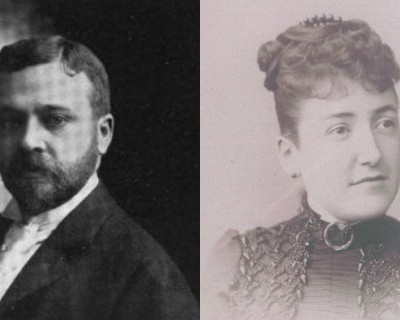
The Young Mr. and Mrs. Nickerson: A Brief History
“For the last five years Mr. Nickerson has been considered one of the choice fish in the social swim,” wrote a New York Telegraph correspondent, “and all sorts of bait have been thrown at him.”

[From the Collection] Landscape by Agnes Northrop
As we draw nearer to the opening of the Louis Comfort Tiffany exhibition, this work—created by one of the artists he employed—is a fitting one to stop and enjoy for a moment. On view in the Drawing Room on the mansion’s first floor, it is an elegant and simple painting with quite a history behind it, one which has only recently come to light.
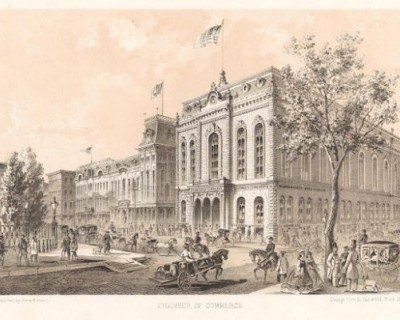
[Speaking of Architecture] The Life and Work of Edward J. Burling
Edward J. Burling was, arguably, the first great architect in this city of great architects.
[From the Collection] Tiffany Studios Humidor, c. 1902-10
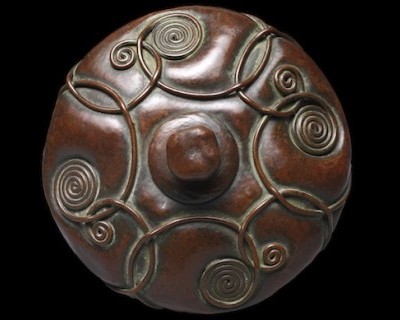
This fanciful blown-glass work by Tiffany Studios always stirs the curiosity of visitors to the Reception Room. Despite appearing to be just an objet d’art to admire, it is designed to serve a function—as a humidor, used to preserve tobacco in an airtight space.
“He Thought it was Architecture Run Crazy”
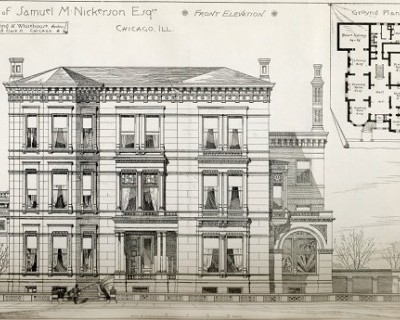
The Driehaus Museum officially turns five years old today.
[Q&A] with Dr. Susan Braden, Author of ‘The Architecture of Leisure’
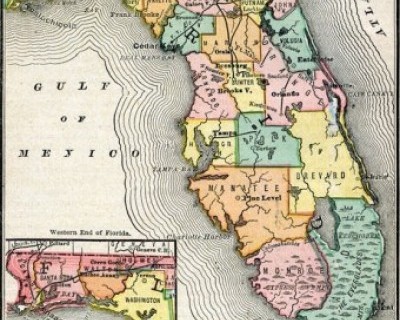
Henry Flagler and Henry Plant had much in common. Both came from humble American beginnings; were undereducated relative to their future self-made success; adopted New York City as home;
Party Like It’s 1888
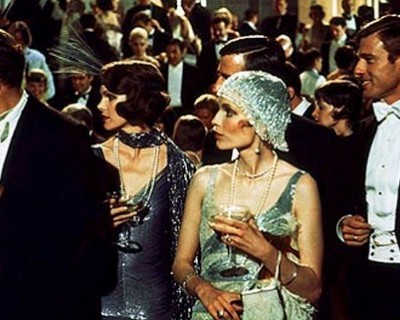
We are so inspired by the image of Robert Redford as the lovelorn Jay Gatsby, standing on a Newport mansion’s balcony—an image that combines a character of the Lost Generation with the architecture of the Gilded Age—that we decided to show the 1974 film in our own Gilded Age mansion as the first of our new Mix and Mingle at the Movies program series.
The Burnham Plan and the End of McCormickville
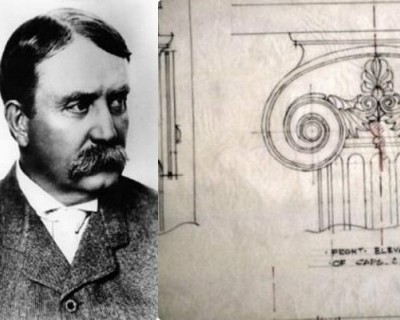
The gleaming White City of the World’s Columbian Exposition made Daniel H. Burnham, architect, into a city planner.
[You Asked] What is That Other Mansion?
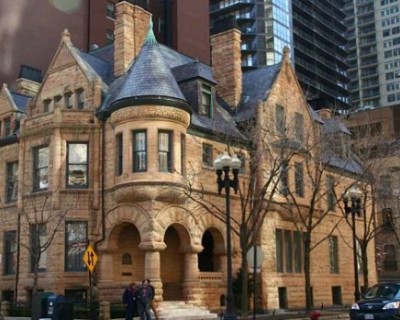
You Asked… What is the story behind the peach-colored mansion catercorner to the Driehaus Museum?
Announcing ‘Louis Comfort Tiffany: Treasures from the Driehaus Collection’
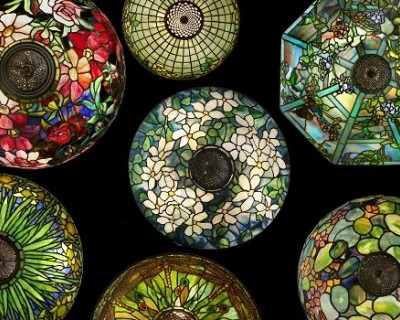
Remember last week, when we told you that our second-floor galleries are intended to someday play host to decorative arts exhibitions? Well, the time has (almost) come.
[You Asked] Why Aren’t There Beds in the Nickerson Bedrooms?
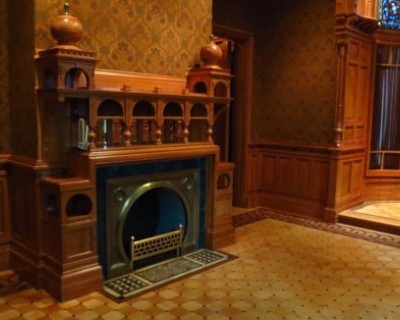
Today’s blog is part of an occasional series dedicated to answering visitors’ questions.
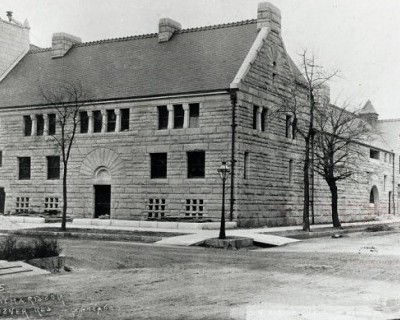
[Speaking of Architecture] The Story of H. H. Richardson
A beautiful Romanesque house was completed for John and Frances Glessner in 1887, just five years after the dust had settled from construction on our Nickerson mansion.
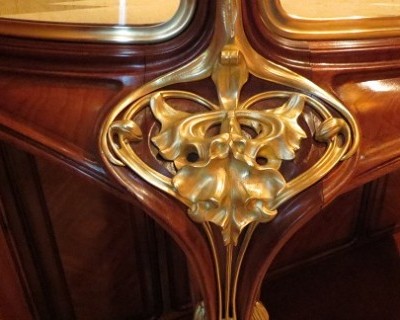
[Featured Designer] Louis Majorelle (and the “Les Orchidées” Vitrine)
Louis Majorelle made a splash at the Exposition Universelle in Paris in 1900 at a precise and brief moment in European art history.
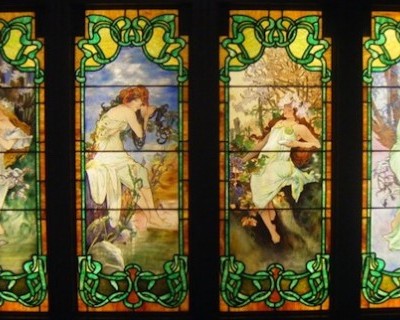
[Q&A] with Rolf Achilles of the Smith Museum of Stained Glass Windows
It’s become a Nickerson Lecture Series tradition to welcome a local scholar for the first lecture of the season.

A Princely Estate: Domaine de Chantilly, France
The Driehaus Museum has three sister institutions in Europe, each simply resplendent and embodying the highest ideals of preservation and classical architecture, just as we strive to do here in Chicago.
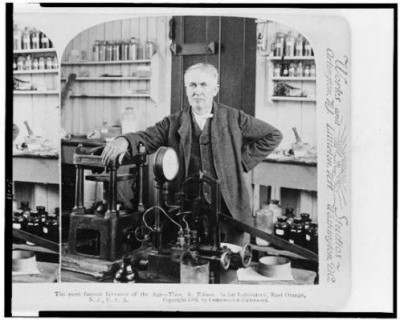
Edison’s Bulbs
Patenting his electric lightbulb would, more than Edison’s 1,093 other inventions, cement his spot as American inventor extraordinaire.
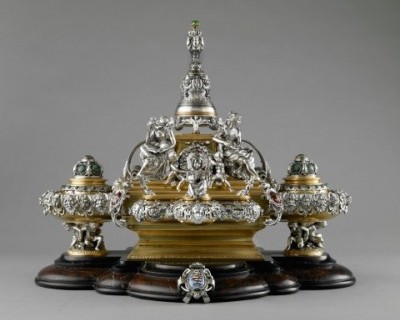
[From the Collection] Jewel- and Gem-Set Inkstand, 1864
This inkstand from the Driehaus Collection packs some of the most eye-catchingly elaborate designs and materials into a small and functional space.
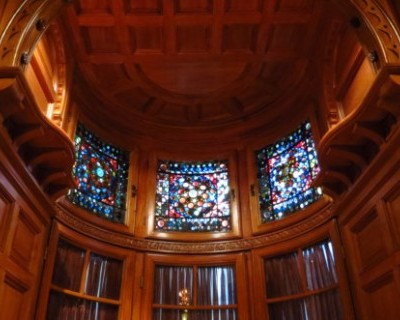
[Speaking of Architecture] The Mihrab Oriel Window
This was a corner room on the floor just below the children’s, and the beauty of it was this window—an oriel window,—projecting beyond the wall, as such windows do, and so exactly at the corner that you could see, so to say, three ways at once when you were standing in it . . . a charming watch tower.”