Deep Dive: Exhibitions
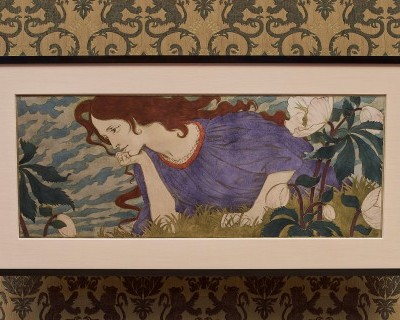
Male Attitudes Toward Women in Late 19th Century Art: Eugène Grasset's Dix Estampes Décoratives
Eugène Grasset's Anxieté has been on view in the Museum as a complement to the exhibition, Theodora Allen: Saturnine. Why Grasset chose to depict this temperament, and why he chose a woman as its embodiment reveals how women were perceived at a moment when they were contesting for their own space in the world.
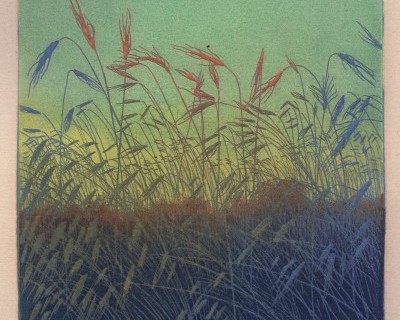
PAN in an International Perspective
With the Museum's purchase of a major collection of 80 prints originally published in the influential magazine Pan, scholar Max Koss reflects on the magnificence of the collection and its significance as a work of cross-cultural artistic exchange at the turn of the last century.
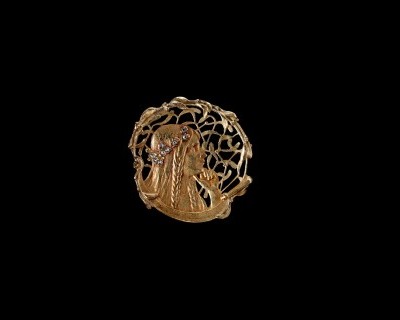
A Look Back at Maker & Muse: Women and Early 20th Century Art Jewelry
Featuring more than 250 stunning works of art jewelry drawn from the collection of Richard H. Driehaus and exemplary national collections, Maker & Muse: Women and Early Twentieth Century Art Jewelry, told the stories of the women who played an integral role in their inspiration and creation.

The Chap-Book: Chicago’s “Little” Magazine (1894-1898)
The Chap-Book followed in the tradition of the cheap small pamphlets or book of tales, short stories, ballads, poems, illustrations, and advertisements sold on the street of most significant cities in England and France since the eighteenth century. But it was also more...
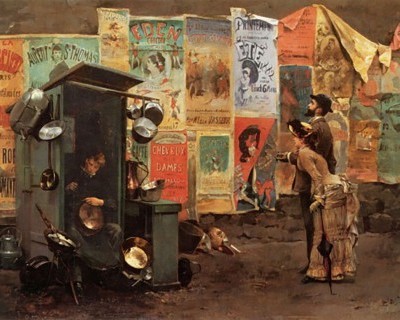
Poster Maniacs: Collectors of the Belle Époque
The Belle Époque posters adorning the galleries of the Driehaus Museum right now shouldn’t, by all rights, exist. They are more than a century old, printed on flimsy paper, with inexpensive inks. Some were once even displayed outside, where the wind, rain, and sun of Paris in its various seasons beat down on them.

The Poster Evolution
In Paris in the nineteenth century, Jules Chéret and the other grand masters of the lithographic poster—Alphonse Mucha, Théophile-Alexandre Steinlen, Eugène Grasset, and Henri de Toulouse-Lautrec—took the medium from mere informational advertising to high art, causing the medium’s popularity to skyrocket.
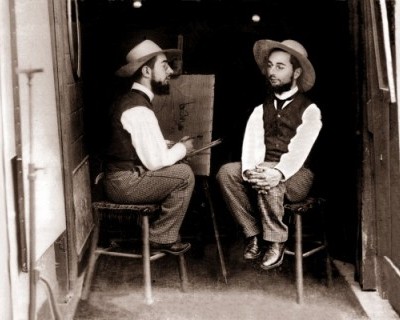
Tragedy & Brilliance: The Life of Henri de Toulouse-Lautrec
There is perhaps no other artist as closely associated with Paris’s ‘Beautiful Age,’ the Belle Époque, than Henri de Toulouse-Lautrec. His art of the late 19th century captured the colorful whirlwind of a raucous, modernizing city, from raunchy cabaret promotions to provocative brothel scenes. He was drawn to the avant-garde performers and prostitutes at very edge of society; an outsider himself, his own experiences informed his subjects.
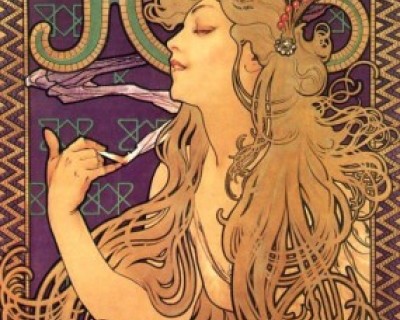
The Sensuous Smoker
This poster for Joseph Bardou Company, or JOB, a Parisian manufacturer of cigarette papers, unabashedly celebrates the sensuous delights of smoking. The young woman’s eyes are closed with pleasure as the lighted cigarette sends a smoky arabesque curving around the image. Her hair cascades around her shoulders and arms, dominating the picture frame. Her white dress, low-cut and gently loose around her body, communicates a freedom only a few women would have enjoyed in the 1890s.
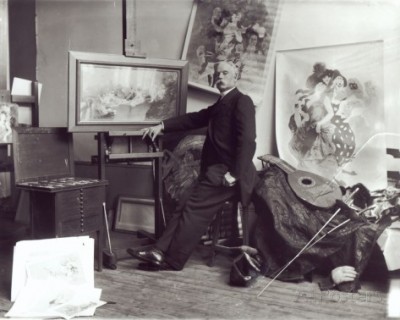
Jules Chéret and the History of the Artistic Poster
The history of the poster starts with black-and-white broadsides in the 1600s, which evolved in the wake of the printing press.
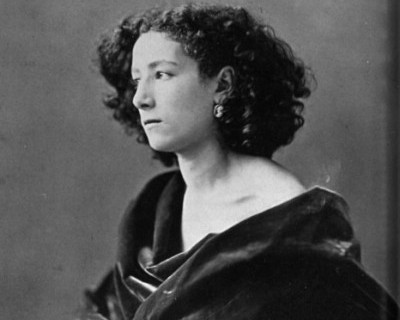
‘Divine Sarah’: The Great Star of the French Poster
Young and stunning, with sculpted eyebrows and a head of rich brunette curls, French actress Sarah Bernhardt first captured the ardor of Paris’s theatre-going elite in the 1870s. The rest of the world’s attention inevitably followed. Admiring critics, resorting to poetic metaphor, likened her voice to pure gold, a nightingale, silver dawn, the stars and moon, and murmuring water.
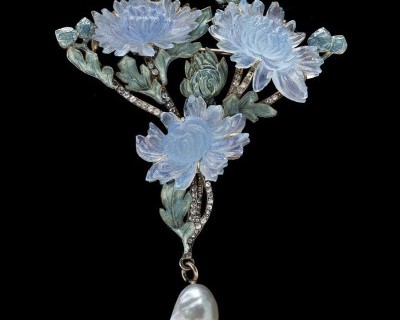
The Good, the Bad and the Ugly: Nature in Early 20th-Century Art Jewelry
Art, according to John Ruskin, the influential writer of the British Arts and Crafts movement, is most beautiful when its forms are derived from nature.
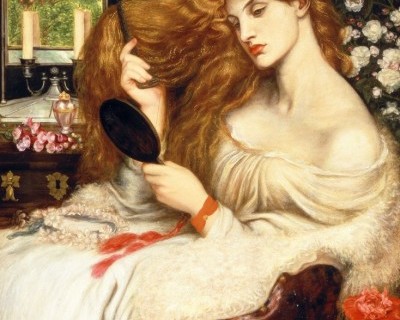
New Fashion, New Jewelry
Every piece of art jewelry on view in the Driehaus Museum’s latest exhibition, Maker & Muse: Women and Early 20th Century Art Jewelry, is a stunner in its own right. But this is not art in a vacuum; not jewelry for jewelry’s sake.
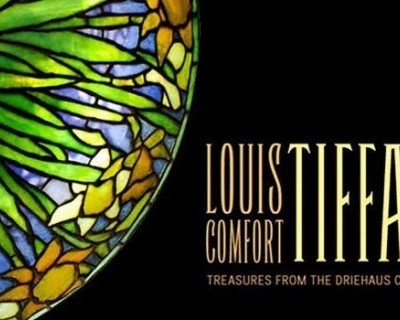
Opening Today! Louis Comfort Tiffany: Treasures from the Driehaus Collection
The lamps are lit, the windows are aglow, and the flowerform vases are arranged like small, beautiful glass gardens.
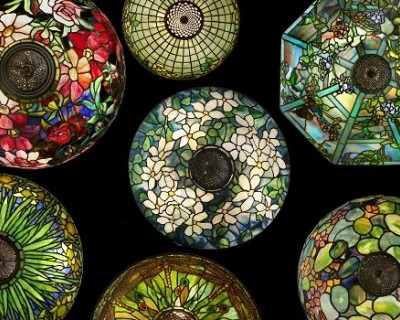
Announcing ‘Louis Comfort Tiffany: Treasures from the Driehaus Collection’
Remember last week, when we told you that our second-floor galleries are intended to someday play host to decorative arts exhibitions? Well, the time has (almost) come.