Deep Dive: Chicagoans and Chicago History
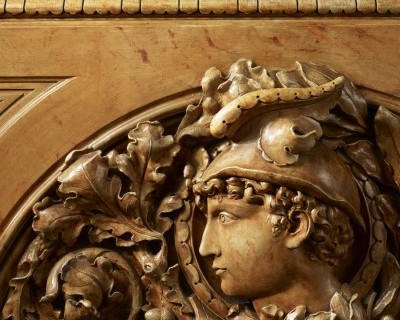
Hidden in the Woodwork: Searching for the Meaning of Acorns at The Driehaus Museum
Why are there so many acorn motifs in the Driehaus Museum?
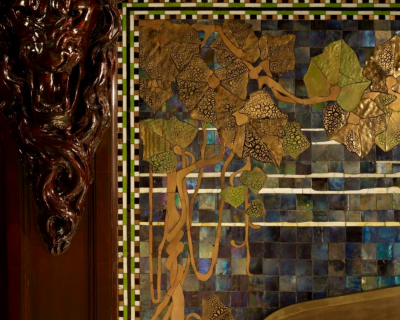
Elegance in Glass
Giannini & Hilgart's glass fireplace surround tells a story of craftsmanship and prosperity during America's Gilded Age.
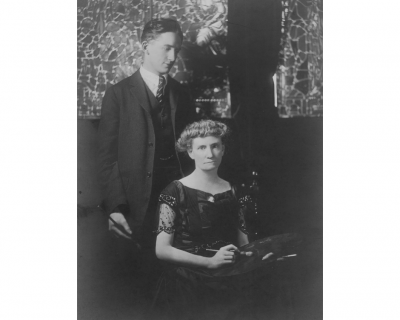
Competition at the Murphy: The Willet Stained Glass and Decorating Company Versus Louis Comfort Tiffany
The Driehaus Museum's Murphy Auditorium saw two of the early 20th century's greatest stained-glass companies competing for its window.

Chicago's Breakdown: When Jazz Came North
It’s often been said that while jazz was born in New Orleans, it grew up in Chicago.

A Tale of Today: Up From the Ashes - Pullman Porters and the Great Migration
As a part of the Driehaus Museum’s ongoing mission to expand upon the shaping of Chicago during the Gilded Age through our A Tale of Today: Up From the Ashes series, this Black History Month we look to the Great Migration, the Chicago Defender, the Pullman porters, and the roots of Chicago’s Black working class.

A Tale of Today: Up From the Ashes – The Spirit of Giving
The second blog in our A Tale of Today: Up From the Ashes series explores a critical juncture in the city’s history when Chicago’s first philanthropists laid the foundation for the public and cultural institutions we continue to enjoy today.

A Tale of Today: Up From the Ashes
Rebuilding Chicago
The first blog in our A Tale of Today: Up From the Ashes series tells the story of the working-class laborers who rebuilt Chicago after the Great Fire of 1871. This blossoming era of industry and creativity came hand in hand with widespread class struggles, strikes, and riots as workers fought to assert their rights and to improve their lives in the growing metropolis.
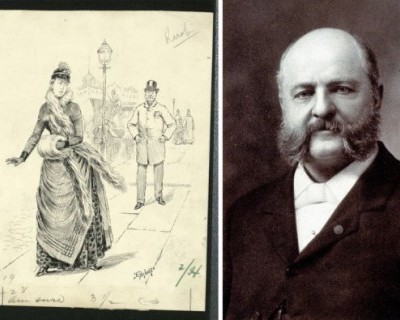
Puck, Anthony Comstock, & the “Suppression of Vice” in Chicago
“The object, purpose, and aim in view of the Society and its branches, as set forth in the constitution and in the brief but pointed talk which followed the making of the report, were to put down the vile traffic in obscene books, pictures, etc., by prosecuting those responsible for it either under the Revised Statutes or the State laws. The extent of the evil, which has shown its ugly head with peculiarly refreshing boldness of late, was dwelt upon to some extent, and the movement met with the unqualified moral and financial support of all present. The constitution was unanimously adapted…”
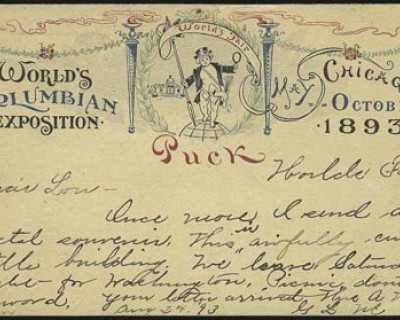
World’s Fair Puck
In 1893, Chicago put on a fair that would awe the world. The World’s Columbian Exposition, so called in honor of the 400th anniversary of Christopher Columbus’s arrival in the New World, displayed the most fascinating innovations and arts of the period in one grand place. The fair organizers envisioned a 630-acre park, designed by Frederick Law Olmsted of New York Central Park fame, filled with bone-white neoclassical buildings by such eminent architects as Henry Ives Cobb, Richard Morris Hunt, Charles McKim, and Louis Sullivan.

Tiffany and Chicago: The McCormick Windows
Cyrus H. McCormick was many things. A native Virginian who became one of Chicago’s great industrialists, he was also a famous penny-pincher, generous philanthropist, stolid Presbyterian, and patent hound. He moved to Chicago in 1847, where he set up the McCormick Harvesting Machine Company factory and prospered.
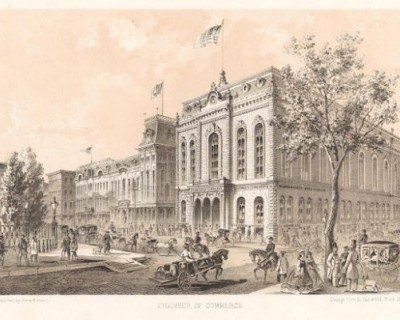
[Speaking of Architecture] The Life and Work of Edward J. Burling
Edward J. Burling was, arguably, the first great architect in this city of great architects.
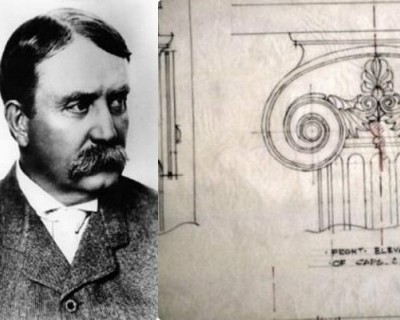
The Burnham Plan and the End of McCormickville
The gleaming White City of the World’s Columbian Exposition made Daniel H. Burnham, architect, into a city planner.
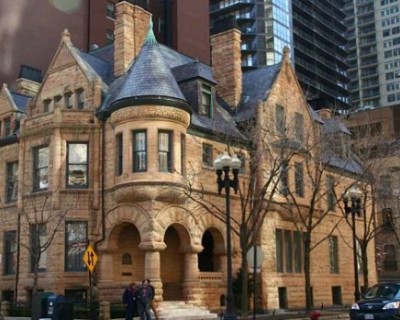
[You Asked] What is That Other Mansion?
You Asked… What is the story behind the peach-colored mansion catercorner to the Driehaus Museum?
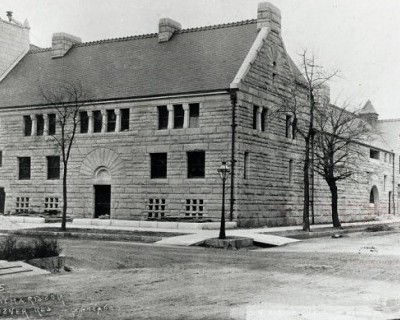
[Speaking of Architecture] The Story of H. H. Richardson
A beautiful Romanesque house was completed for John and Frances Glessner in 1887, just five years after the dust had settled from construction on our Nickerson mansion.
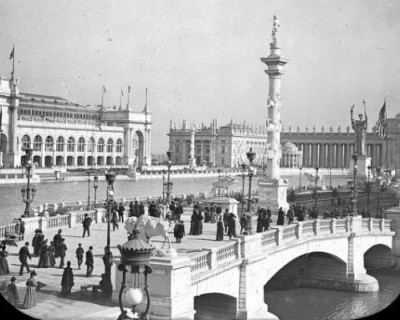
119 Years since 1893: A Visit to Jackson Park
Next week 119 years ago, with a crisp chill entering the air, the closing ceremonies concluded, the crowds began piling into Pullman cars to head back to their own parts of America, and the World Columbian Exposition’s dismantling began.
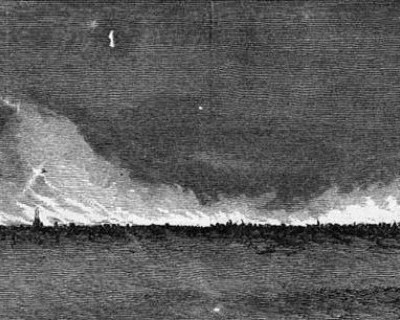
Out at Last: The Great Chicago Fire of 1871
On the morning of October 10, 1871, the flames had finally stopped. What was left was, well, hardly anything. About a four-mile swath had been cleared in two days, everything was in ruins, and the conflagration would go down in history books as an infamous disaster for this new, bustling city: the Great Chicago Fire.
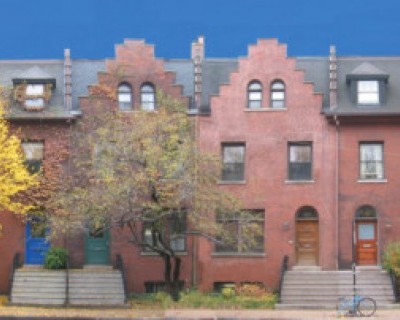
The Other McCormickville: Lincoln Park’s Seminary Townhouses
Ah, Lincoln Park. Here, leafy trees offer dappled shade to quaint, historic residential buildings aligned in cozy, shoulder-to-shoulder rows.
Going to Graceland
The land allotted for Graceland Cemetery in 1860 was well above Chicago’s northernmost dotted line, by about two miles: a suburban ‘new city of the dead,’ as they called it. (The recently-exhumed Lincoln Park being the ‘old’ city of the dead in that scenario.)
A Tour of the World’s Fair: Decorative Objects from the 1893 Columbian Exposition
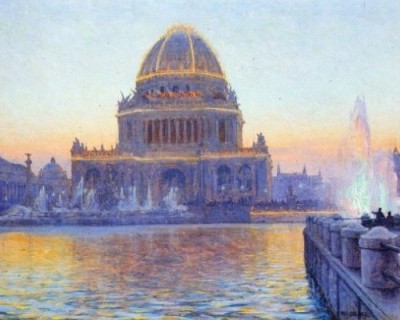
On permanent display in the Driehaus Museum are a number of decorative objects—an artistic silver punch bowl by Tiffany & Company; a painting of the Administration Building; and even a trio of Japanese bronzes, souvenirs purchased by the Nickerson family that originally occupied this mansion—that come exclusively from the 1893 World’s Columbian Exposition in Chicago.