Deep Dive:
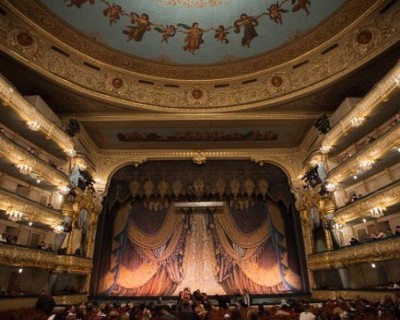
Anna Karenina: How America’s Gilded Age Social Customs Mirrored Russia’s
I have always been struck, while reading Anna Karenina (or, more recently, while watching Leo Tolstoy’s 1873-1878 tale played out by Jude Law and Keira Knightley in sumptuous costumes in this year’s film version) by the similarities it shows between upper-class late 19th-century Russia and late 19th-century America.
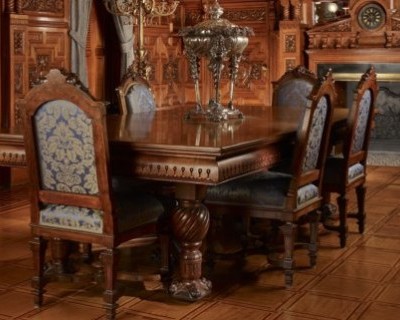
[From the Collection] Herter Brothers Dining Table, 1883
This Herter Brothers dining table is a significant piece in our collection, for its beauty as well as its history.

Thorstein Veblen and the ‘Theory of the Leisure Class’
Typically (and stereotypically), the Gilded Age is known for: 1) Money and industry, and 2) People who made a lot of money in industry.
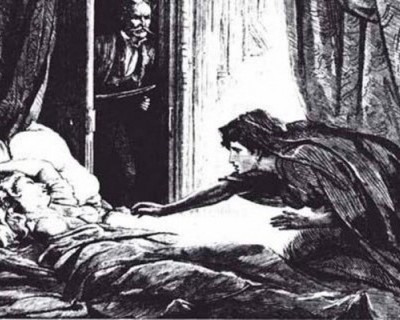
Ghoulies, Ghosties & Long-Legged Beasties: Horror Fiction of the Victorian Era
One might be surprised to discover a giant black spider attacking a Gilded Age fine and decorative arts museum. But yes, at the corner of Erie and Wabash, a colossal arachnid is navigating the exterior of the historic Nickerson Mansion.
[Q&A] with Anna Tobin D’Ambrosio of the Munson-Williams-Proctor Art Institute
Last week the Driehaus Museum welcomed Anna Tobin D’Ambrosio, director and chief curator at the Munson-Williams-Proctor Art Institute in Utica, New York, and the final lecturer of the 2012 Nickerson Lecture Series season.
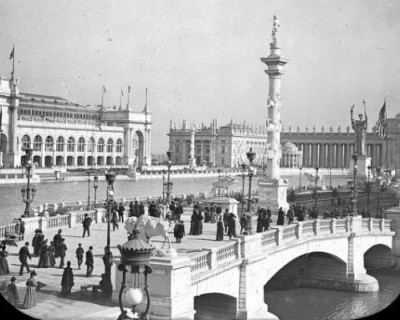
119 Years since 1893: A Visit to Jackson Park
Next week 119 years ago, with a crisp chill entering the air, the closing ceremonies concluded, the crowds began piling into Pullman cars to head back to their own parts of America, and the World Columbian Exposition’s dismantling began.

After the Fire, Quarries Dynamited
The woman The Wire called a “bassoon colossus” treated us and our visitors here on Saturday to live performances of a work inspired by the Driehaus Museum’s unique architecture and history.
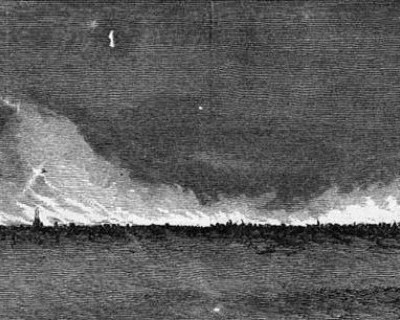
Out at Last: The Great Chicago Fire of 1871
On the morning of October 10, 1871, the flames had finally stopped. What was left was, well, hardly anything. About a four-mile swath had been cleared in two days, everything was in ruins, and the conflagration would go down in history books as an infamous disaster for this new, bustling city: the Great Chicago Fire.

[You Asked] Didn’t This Building Used to be Black?
You Asked… Didn’t the Nickerson Mansion used to be black? And how did conservationists manage to clean the exterior?

[Q&A] with Dr. Caroline Hellman of City University of New York
This year marks the 150th birthday of Edith Wharton, and Dr. Caroline Hellman—associate professor of English in New York—graciously accepted our invitation to speak about the writer and interior designer for our Samuel M. Nickerson Lecture Series.
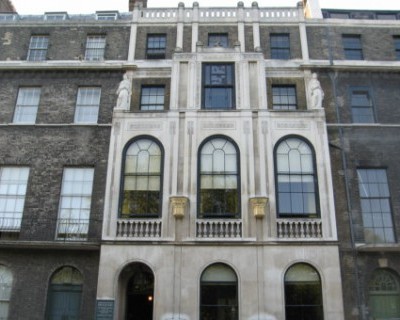
An Architect’s Legacy: Sir John Soane’s Museum, London
The Driehaus Museum has three sister institutions in Europe, each simply resplendent and embodying the highest ideals of preservation and classical architecture, just as we strive to do here in Chicago.
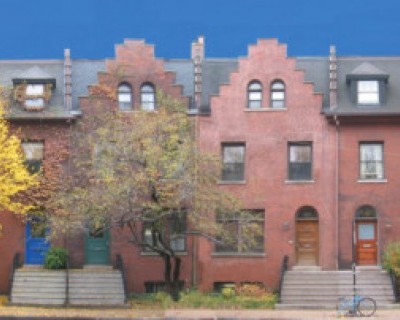
The Other McCormickville: Lincoln Park’s Seminary Townhouses
Ah, Lincoln Park. Here, leafy trees offer dappled shade to quaint, historic residential buildings aligned in cozy, shoulder-to-shoulder rows.

Going to Graceland
The land allotted for Graceland Cemetery in 1860 was well above Chicago’s northernmost dotted line, by about two miles: a suburban ‘new city of the dead,’ as they called it. (The recently-exhumed Lincoln Park being the ‘old’ city of the dead in that scenario.)
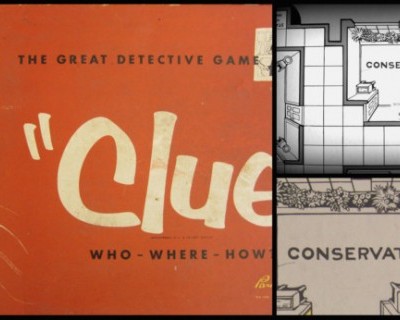
It Was Colonel Mustard With the Candlestick…
There is this great line in the book Great Houses of Chicago, 1871-1921, which I lugged from the shelf in search of insights on the popularity of conservatories during the Gilded Age. It begins, “The Victorians were notorious for collecting…”—and that’s a perfect enough start.
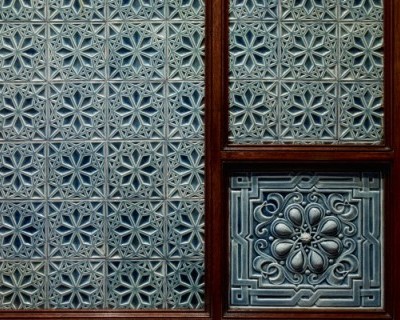
[Featured Designer] John Gardner Low
John Gardner Low was a ceramics artist of about 41 when he approached the crowded exhibitions in Philadelphia at the 1876 Centennial Exposition. He was a Massachusetts man and had traveled far, like the millions of others, to see the first U.S. world’s fair.
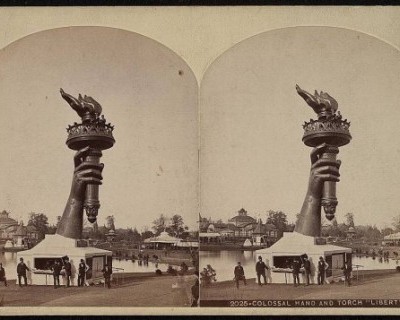
Best of Independence Day: The Gilded Age Edition
The Fourth didn’t become a federal holiday until 1941, but America has been celebrating it since the signatures went down on the Declaration of Independence in 1776. Looking back at a Gilded Age’s worth of Fourth of July celebrations in Chicago, here are some of best (and some of the worst) moments between the Civil and First World Wars.
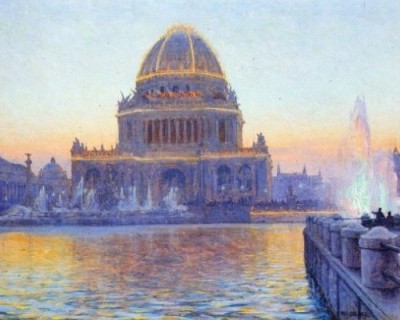
A Tour of the World’s Fair: Decorative Objects from the 1893 Columbian Exposition
On permanent display in the Driehaus Museum are a number of decorative objects—an artistic silver punch bowl by Tiffany & Company; a painting of the Administration Building; and even a trio of Japanese bronzes, souvenirs purchased by the Nickerson family that originally occupied this mansion—that come exclusively from the 1893 World’s Columbian Exposition in Chicago.
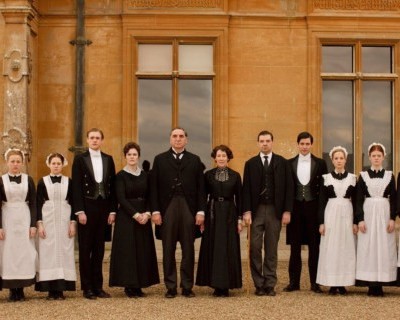
Below America’s Stairs: Domestic Servants in the Gilded Age
The Museum’s visitors are always interested in how America’s wealthy lived back in the Gilded Age—with their parties, art collections, luxuries, Europe tours, and so on—but lately we’ve noticed this curiosity giving way to a positive deluge of questions about the other half: the Nickersons’ live-in servants.
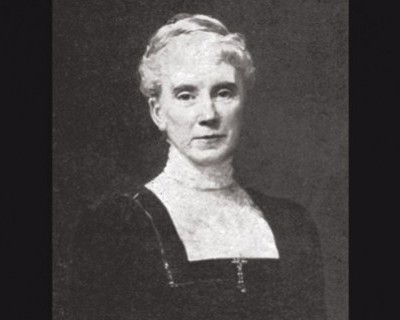
[You Asked] What Was Mrs. Nickerson Like?
Today’s blog is part of an occasional series dedicated to answering visitors’ questions.
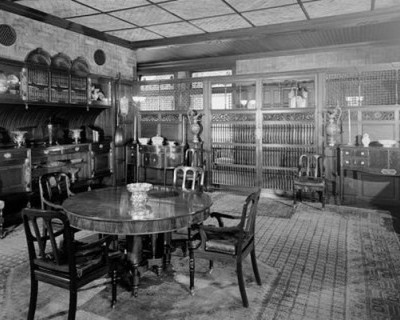
[Q&A] with Caitlin Emery of the Preservation Society of Newport County
Last week, East Coast native Caitlin Emery traveled—she admitted—as far west as she’s ever been, to deliver a lecture entitled Innovation and Opulence: Stanford White and the Kingscote Dining Room at the Driehaus Museum.

The Ship of Dreams
As we near the 100-year anniversary of a tragedy that shook an entire culture’s belief in its own bright, progressive destiny, some American teens have supposedly been surprised to discover that the RMS Titanic’s sinking was, in fact, real.

[From the Collection] Cupid and Psyche
The largest marble sculpture in the Driehaus Museum, Cupid and Psyche commands the center of the mansion’s original domestic art gallery.

[Featured Member] Adele Friedman: Artist, Teacher, Explorer
When I have friends who visit me from Europe I say, ‘This museum is one of the places you have to put on your list.’ There are European influences in the house but it is really specific to the Midwest—it’s the Gilded Age of the Midwest.
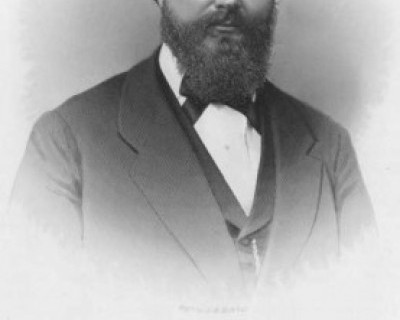
A Nickerson Tour
In some ways, Samuel M. Nickerson was a Chicago man. This is where he made his wealth, coming to the city in 1858 newly married and penniless after a dry goods business failed in the South.
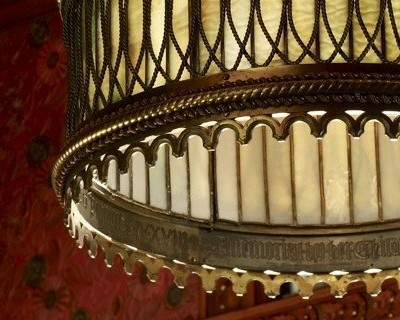
[You Asked] What is the Inscription in the Tiffany Chandelier?
Today’s blog is part of an occasional series dedicated to answering visitors’ questions.
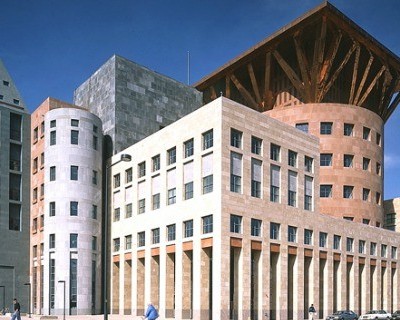
The 2012 Driehaus Prize
In a profile published in 2007, Chicago magazine called Richard H. Driehaus “one of the city’s most dedicated advocates for historic preservation.”
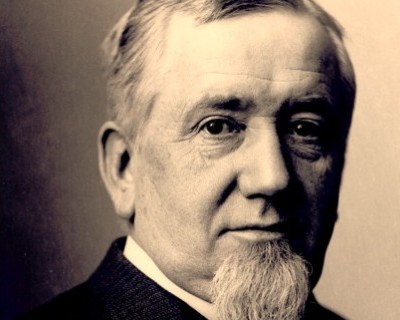
The Moneymakers: Wealthy Entrepreneurs of Chicago’s Gilded Age
Around the turn of the 19th century, Chicago was hopping. It wasn’t always that way—a mere four families lived here in 1812 after the British took Fort Dearborn.
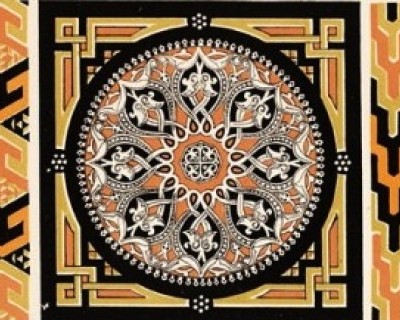
On ‘The Grammar of Ornament’
The Grammar of Ornament is a book of patterns by Owen Jones; it was published in 1856 in London. In its pages nearly 100 illustrations represent decorative motifs used by cultures around the world.
[You Asked] Where Does Satinwood Come From?
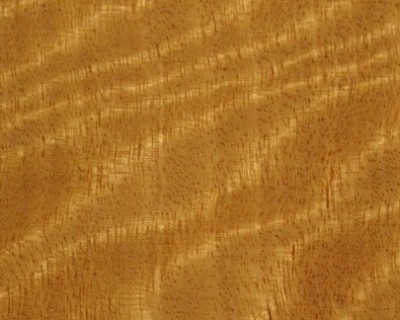
Today’s blog is part of an occasional series dedicated to answering visitors’ questions. Satinwood has one of those thoroughly non-mysterious names that tells you exactly what you’re going to get: wood that looks like satin.
A Gilded Age Christmas Dinner
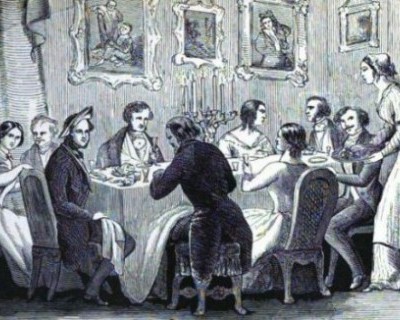
(This blog is the final in a short series of snapshots that illustrate how Americans in the late 19th and early 20th centuries came upon or celebrated certain holiday traditions.)
“Dolls, Toys, and Holiday Fancy Goods”
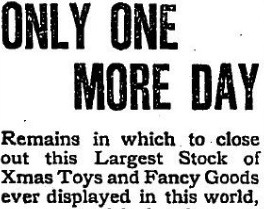
[This blog is the second in a short series of snapshots that illustrate how Americans in the late 19th and early 20th centuries came upon or celebrated certain holiday traditions.]
O Tannenbaum, O Tannenbaum
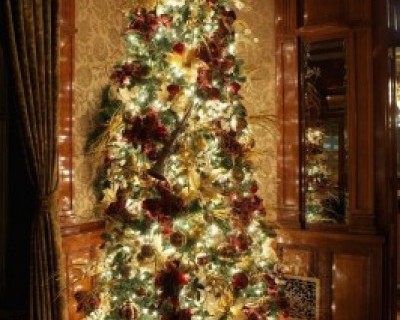
As you settle into winter holiday traditions of your own—re-watching that Rudolph claymation film, stringing popcorn and cranberries to hang on the tree, and dining on fried catfish and Austrian potato salad on Christmas Eve were a few of my own childhood favorites—here’s a look at how many Americans during the Gilded Age celebrated “the most wonderful time of the year.”
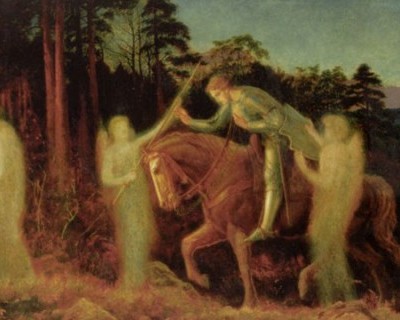
[From the Collection] The White Knight
Since summer there has been a blank spot above the Drawing Room piano just begging for a painting, and three weeks ago Sir Galahad arrived and saved the day.
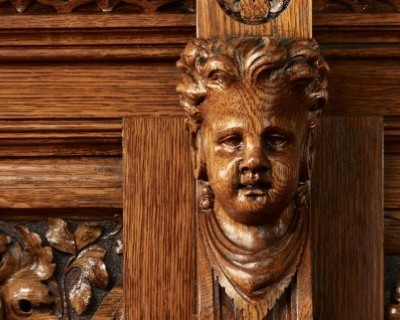
Of Gilded Age and Italy: Or, Why Pierpont Morgan Used Someone Else’s Family Crest
The Nickerson Mansion has nearly 20 galleries on its three floors and design-wise, each room is pretty much doing its own thing. Walk into the drawing room, and bam. All the noble delicacy of Louis XIV France.
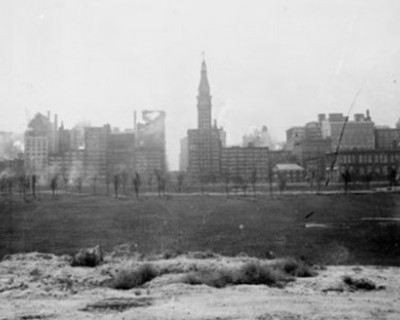
Dear Chicago
This city—with all its liveliness and contradictions—has had its share of literary immortalization. Carl Sandburg did it perhaps most famously with his poem “Chicago.”
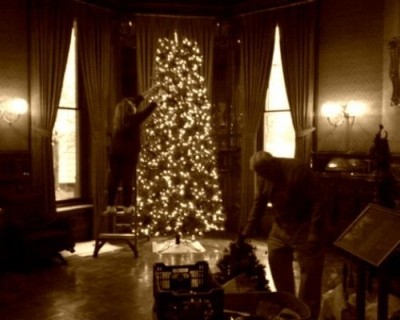
Decking the (Marble) Halls
If you happened to stroll by the Museum during the Halloween season, you may have noticed the gigantic witch. She sat astride a broom just a few feet away from the main entrance—red eyes glowing, cape flapping, dwarfing the landscaping and pretty much anything else near the corner of Wabash and Erie.
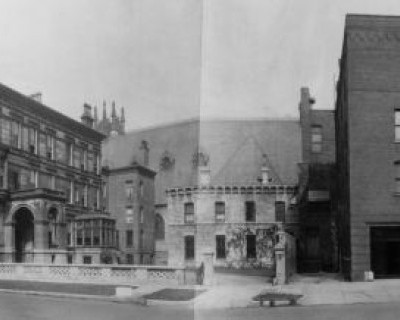
[You Asked] What is McCormickville?
You Asked… Why was this neighborhood called McCormickville (and why didn’t the Nickersons live down on Prairie Avenue with the rest of the wealthy)?
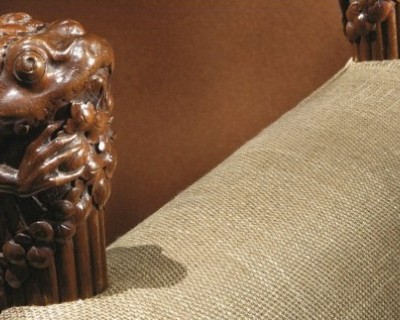
[From the Collection] Tiffany Studios Chair, ca. 1881-83
In the middle of a tour recently, on the sixth or seventh mention of Louis Comfort Tiffany’s work, a woman turned and exclaimed—as if to have it out and finished with—“Is everything here a Tiffany?”