A Tale of Today: Emerging Artists Fellowship - Unyimeabasi Udoh and Alexandria Eregbu
April 07, 2021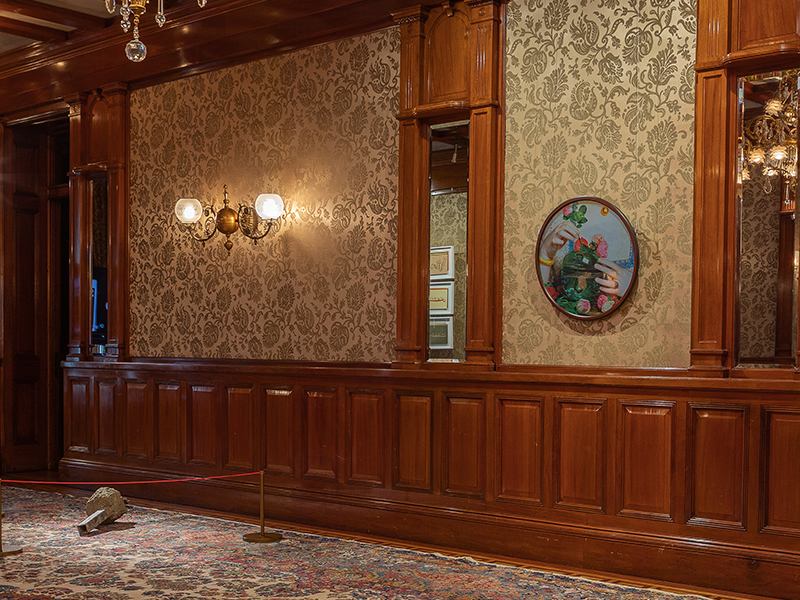
Now in its second pilot year, the A Tale of Today Emerging Artists Fellowship supports promising, emerging talent from Chicago’s arts community through an unprecedented career-building opportunity to engage with the network and audience of the Driehaus Museum. The four Chicago-based ALAANA artists and designers along with Curatorial Fellow, Kekeli Sumah form a united cohort as they navigate this experience, guided by Museum staff.
The Fellowship is inspired by the many facets of the Nickerson Mansion, as an exemplary model for innovative achievement, a showcase of cutting-edge design, a reminder of the complex history of the Gilded Age, and an incubator for learning as art students were invited to study from the Nickerson’s extensive art collection and to utilize their art gallery as a place to develop and gain inspiration for their own work.
The program has consisted of meetings with art professionals, career counseling sessions, and public programming experiences which culminate in a pop-up exhibition, featuring the Fellows’ work, inspired by their experience at the Driehaus Museum, installed in the Historic Ballroom of the Nickerson Mansion.
Here two of our Fellows, Alexandria Eregbu and Unyimeabasi Udoh explore the process of presenting their work at the Driehaus Museum.
What challenges or opportunities did creating work displayed amongst the architecture and design of the 1883 Nickerson Mansion present?
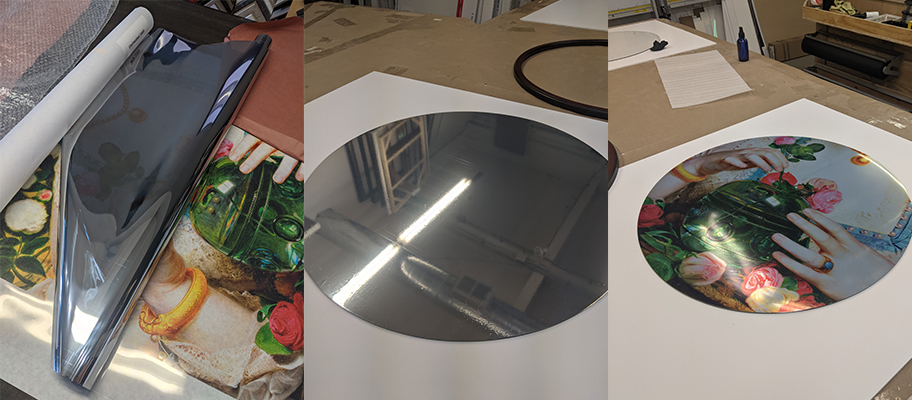
Unyimeabasi Udoh: For me, one of the biggest challenges was dealing with the scale and grandeur of the museum. My work is often smaller, minimal, and low-contrast, and I wanted to try to meet the space on its terms. This also provided an opportunity, though, to work at a larger scale, and to work out the fabrication and logistical issues that came with it.
Alexandria Eregbu: It is easy to see that the aesthetic choices made towards the design and architecture of the Nickerson Mansion are for a particular audience— an audience who values abundance and opulence to the point of excess. A scale that is unfathomable to most people, then in 1883 when the mansion was built, and now, in 2021.
The biggest challenge then became rationalizing the value of bringing my own work, as an individual who is foreign to this particular environment. For me, the opportunity was sought in two ways. First by allowing myself to honor my own voice, in an arena where I couldn’t help but to feel small but would decide to speak anyways and secondly, in the ability to extend these conversations that started with myself amongst a cohort of artists in the fellowship, during this pivotal moment in global history.
How are themes you explore in your practice incorporated into the work you are presenting at the Driehaus Museum?
UU: I’m interested in communication, systems of knowledge, and the ways that these things are constructed. Part of that involves looking at the Western canon of art history, something that is very present in the Nickerson Mansion’s architecture and the Driehaus Museum’s collection. I was especially drawn to the Pre-Raphaelite paintings in the collection and the way that they reflected the opulence of both the house and museum. My piece in the exhibition, Idle Hands (Grace Rose), appropriates the image of a contemporary work: Grace Rose, an 1886 painting by Frederick Sandys.
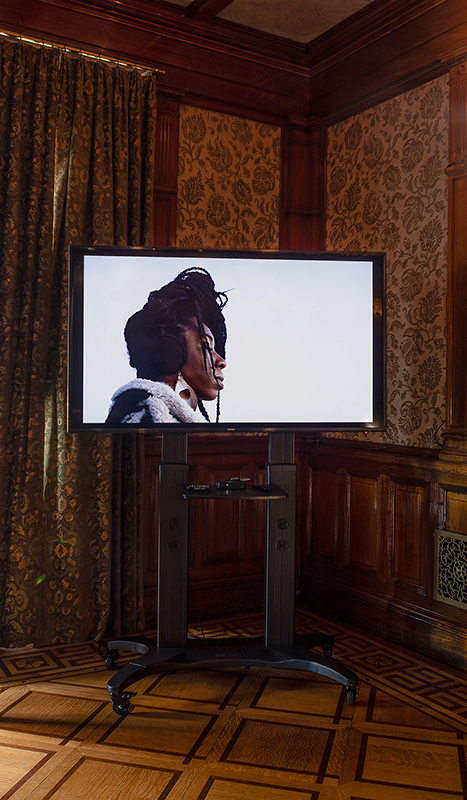 AE: My practice considers notions of home and belonging through spiritual, material, literary, and creative inquiries of Africa and Africa’s diaspora. My work for this exhibition offers a cautionary tale about what happens when we fail to recount your beginnings and furthermore addresses what happens when we allow for our creative faculties to be co-opted. In the case of the first chapter of my film, ‘The Reason Why We Hunt’, I consider the creative process as experienced by the main character, Nnenna, and her journey towards self-authorship.
How did working within a cohort influence the art you chose to present?
UU: I think that all of us wanted to present work that would play well with each other’s. In my case, I decided to make a piece that would be a bit more integrated with its surroundings based on its framing and pictorial content.
AE: I’ve deeply enjoyed the dialogue and feedback shared between the fellowship cohort…
_Udoh2_sm.jpg) Do you feel like your exposure to the Driehaus Museum will have an impact on future work?
Do you feel like your exposure to the Driehaus Museum will have an impact on future work?
UU: It was good to have the experience of engaging with a grander space and making a more site-specific work in this fashion; it’s something I’ll keep with me moving forward. The research on Pre-Raphaelite paintings I did was engrossing, too, and it’d be worth exploring other work in this vein—both the content and the method of fabrication and display.
AE: My hope is that the Driehaus Museum will have a positive impact on my future work...