Hidden in the Woodwork: Searching for the Meaning of Acorns at The Driehaus Museum
April 02, 2025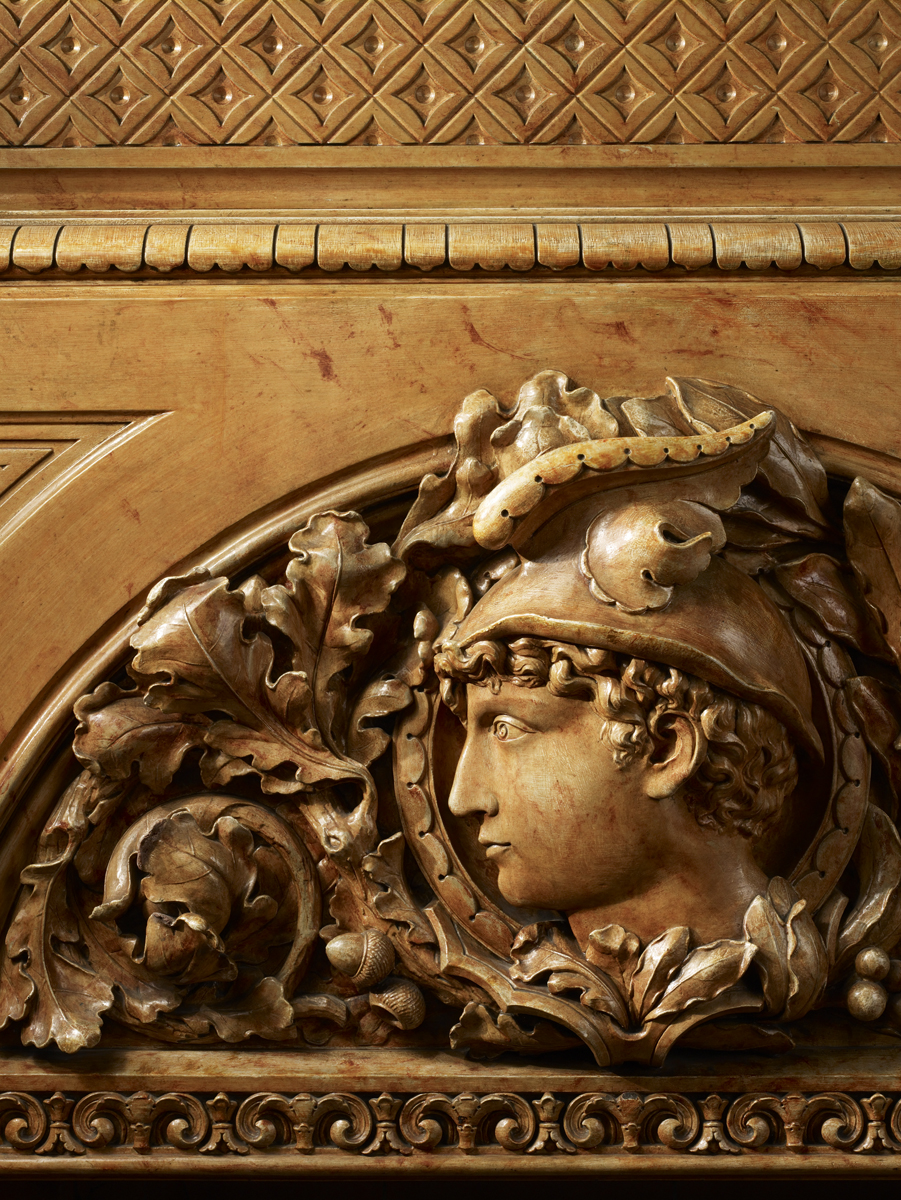
This blog post was written by Germma Rosenthall as part of her work in Loyola University of Chicago's Master's of Public History.
In the galleries of the Driehaus Museum, lighting and design draw the visitor’s eye to certain focal points. In the dining room it is the fireplace—framed by botanical motifs carved from quarter sawn white oak—that is perhaps the greatest of these visual anchors. However, the oak leaves and acorns at the heart of the fireplace carvings are easily overlooked amidst the sensory swarm of the room. Acorns also appear in the fine details of the smoke room fireplace and the marblework at the base of the grand staircase. Here too, they risk being absorbed into their surroundings unless one looks closely, and one should; as with everything else in the Museum, they are rich with meaning.
.png)
The Driehaus Museum recognizes the association of acorns with hospitality, an interpretation rooted in German culture [1]. They appear in other eminent Gilded Age architecture as symbols of strength and longevity. This connotation reflects their use in older European—specifically German—folkloric traditions to represent health, fecundity, and immortality [2]. It stands to reason that acorns staged in a wealthy family’s dining room assumed the virtue of hospitality as an extension of the aforementioned meanings. When the Driehaus Museum was a home back in 1883, guests were invited to partake in the host’s vivifying and bountiful offerings at a dining room table that stretched from one side of the room to another when the leaves were taken out.

Much of the Museum's interior design—specifically its woodwork— is attributed to William August Fiedler [3]. Fiedler’s involvement was considerable and well-documented. A draftsman employed by one of the firms involved in the mansion’s construction wrote in a letter “...Burling is architect of Nickerson's house, but Fiedler was employed on room finish, and even in marble work, Fiedler's design for [the] stair rail is taken in place of Burling's" [4]. This substantiates the theory that Fiedler was responsible for planting acorns around the mansion. Moreover, he had a reputation for thinking critically about placement and structure. He was well-versed in a host of design styles and deliberately combined them to achieve his purpose [5]. Surely, he called upon this expertise when devising even the smallest ornamental features.
.jpg)
Fiedler’s personal and professional background offers insight into the intended symbolic value of the mansion’s acorns. Before settling in Chicago, Fiedler spent several years working as an interior designer in New York alongside prominent architects, some of whom were responsible for notable civic and private projects that exhibited acorns [6]. These sites include Grand Central Station and the Vanderbilt family homes, The Breakers and Marble House. In the words of Cornelius Vanderbilt II, “Great oaks from little acorns grow” [7].
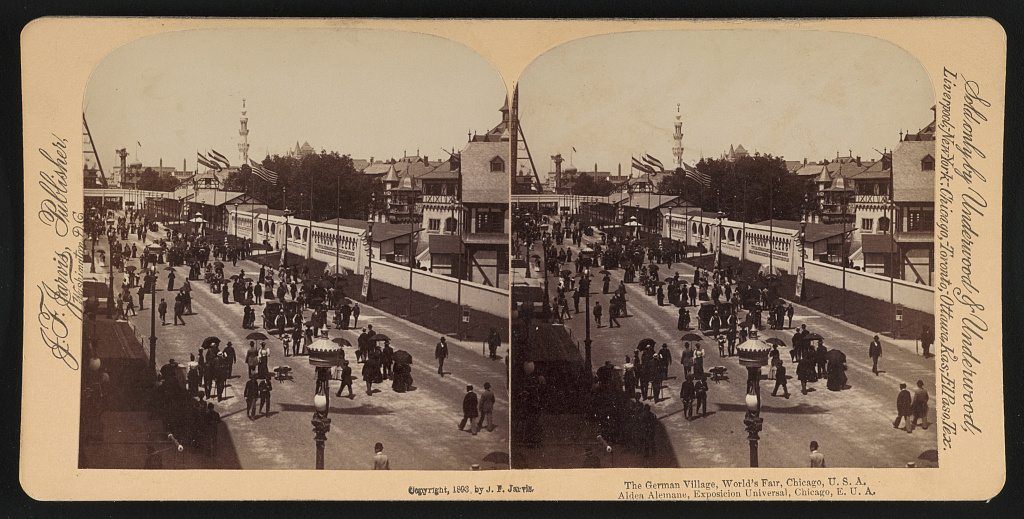
Fiedler immigrated from Prussia to the United States in 1871. His immigration story coincided with a mass migration of Germans to Chicago [8]. Fiedler was heavily involved in German aesthetic representation in the city, making this a relevant route to interrogate. He was the architect behind a number of structures constructed for the 1893 World’s Fair, including the host of buildings that made up the “German Village” [9].
Assuming acorns entered Fiedler’s design philosophy through cultural osmosis consciously or otherwise, it is necessary to trace the trajectory of this symbol in European history. The oak tree was a symbol of eternal wellness and life among the Nordic tribes [10]. Centuries later, acorns were regarded as famine food and therefore associated with poverty and austerity. This shifted sharply back to a noble connotation in modern history. A comment on a recipe for acorn coffee in an early nineteenth century English cookbook reads "This Receipt is recommended by a famous German physician, as a much esteemed, wholesome, nourishing, strengthening nutrient for mankind” [11]. Fiedler was likely the craftsman behind the acorn motifs distributed throughout the Driehaus Museum, which expressed a sense of wellness, abundance, and in the case of the dining room, the virtue of hospitality.
Notes
[1] Liz Ferry (guest services coordinator) in discussion with the author, November 2024.
[2] Lehner, Ernst and Johanna. Folklore and Symbolism of Flowers, Plants and Trees. New York: Dover Publications, 2003.
[3] Bagnall, David. An American Palace: Chicago’s Samuel M. Nickerson House. Chicago: University of Chicago Press, 2011.
[4] “The Nickerson Series: William August Fiedler.” Driehausmuseum.org. Driehaus Museum, June 12, 2020. https://driehausmuseum.org/blog/view/the-nickerson-series-william-august-fiedler
[5] Robins, Anthony W. Grand Central Terminal: 100 Years of a New York Landmark. New York: Abrams (Ignition): 2013.
[6] Protess, David L. The Mayors - The Chicago Political Tradition. Carbondale: Southern Illinois University Press, 1995.
[7] “Ryerson and Burnham Art and Architecture Archive.” artic.contentdm. Art Institute of Chicago. Accessed November, 2024. https://artic.contentdm.oclc.org/digital/search/searchterm/A.%20Fiedler%20/field/all/mode/all/conn/and
[8] McWilliams, Mark. Seeds: Proceedings of the Oxford Symposium on Food and Cookery. London: Prospect Books, 2019.