A Tale of Today: Up From the Ashes
An Introduction
October 20, 2020
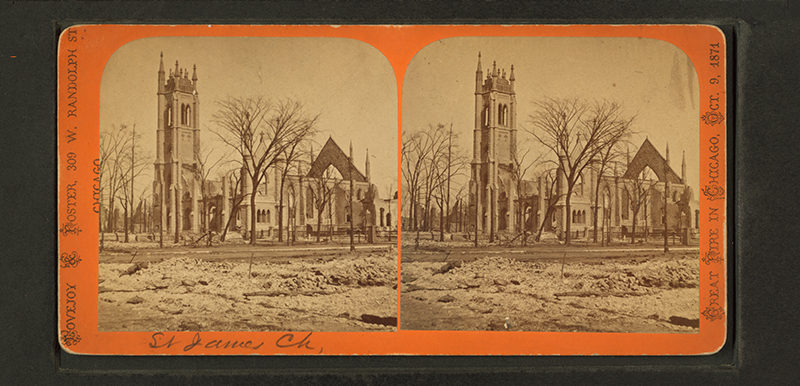
Having just passed the 149th anniversary of the Great Chicago Fire and as we look ahead to its 150th next year, it is worth taking a moment to contemplate the fire’s place in the history of Chicago and how it shaped the city’s future. In the wake of the devastation wrought by the Great Fire of 1871, a new Chicago began to rise.1 The destruction of much of the city center and North Side left a canvas on which some of the most talented architects of the day could re-imagine the urban landscape. This became the city of Louis Sullivan, William Le Baron Jenny, Daniel Burnham, and Edward Burling. Industry also flourished as Chicago entered the Gilded Age and became a center for meat packing, railroads, and steel production. But while names like Sullivan, Burling, Armour, and Swift are well known to posterity, the names of those whose labor built Chicago in the late 19th and early 20th century have been less documented or simply forgotten over time.
So, with the goal of shining a light on those less celebrated individuals whose many contributions shaped our city, The Richard H. Driehaus Museum inaugurates our new blog series A Tale of Today: Up From the Ashes. This series will run in concert with our second contemporary art exhibition, A Tale of Today: Nate Young and Mika Horibuchi, and in the months to come we will explore a variety of topics that will highlight the stories of Chicago’s working class and individuals whose histories help weave together a more complete story of Gilded Age Chicago. As this series progresses we will tell stories of the immigrants who made Chicago their home, the Great Migration that brought African Americans from the South to the North, the role of women in both work and reform, and the fraternal organizations and churches that supported the workers of the city. By bringing the experience of working-class Chicago to the fore, we hope to provide a fuller picture of the influences and contributions that shaped our city during the Gilded Age and beyond.
1 While the Great Fire of 1871 is by far the best know disaster in the history of Chicago, another fire just three years later also had an impact on the rebuilding of Chicago. This fire which began on the evening of 14 July1874 burned parts of the South Loop and much of what is today Printer’s Row. This conflagration was different than the one of 1871 in that it was much smaller and rather than destroying the commercial heart of the city and the homes of wealthy citizens, it razed mostly the houses of Eastern European immigrants and middle-class African Americans. After this fire, the city cracked down on violation of the new building codes enacted after the Great Fire of 1871. Follow this link to read more: https://chicagology.com/rebuilding/rebuilding028/