Deep Dive:
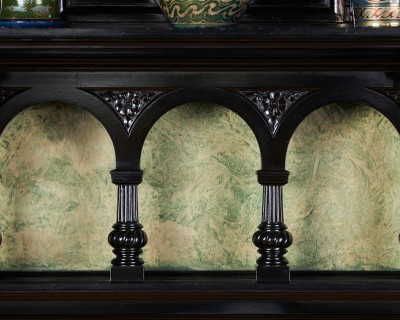
Ebonized Wood in the Driehaus Museum
What is ebonized wood?
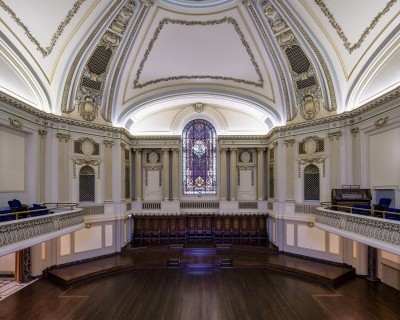
Anne Lee Willet: The Unsung Artisan of a Stained-Glass Legacy
The woman behind the stained-glass window at the Museum's Murphy Auditorium
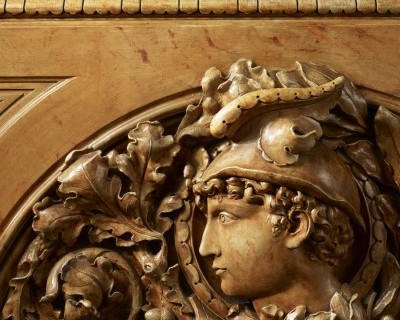
Hidden in the Woodwork: Searching for the Meaning of Acorns at The Driehaus Museum
Why are there so many acorn motifs in the Driehaus Museum?
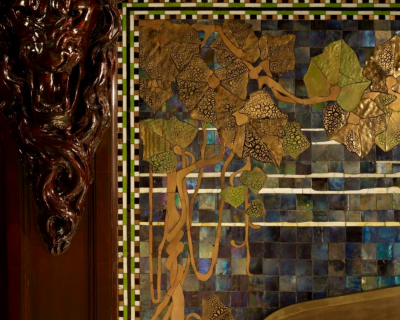
Elegance in Glass
Giannini & Hilgart's glass fireplace surround tells a story of craftsmanship and prosperity during America's Gilded Age.
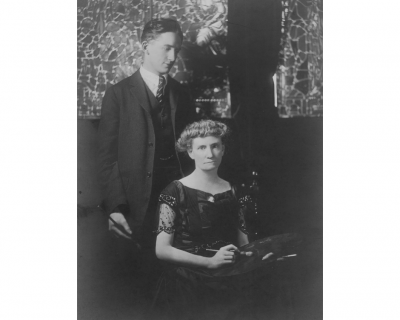
Competition at the Murphy: The Willet Stained Glass and Decorating Company Versus Louis Comfort Tiffany
The Driehaus Museum's Murphy Auditorium saw two of the early 20th century's greatest stained-glass companies competing for its window.

Resplendent Ornament: Two Nineteenth-Century Approaches
In the late 19th century, Eclecticism and theories of ornament shaped the distinct vision of the Nickerson Mansion and the architectural ornament created by Louis Sullivan.

Chicago's Breakdown: When Jazz Came North
It’s often been said that while jazz was born in New Orleans, it grew up in Chicago.
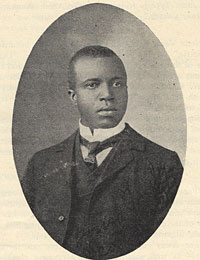
Ragtime: A Great American Innovation
Discover how ragtime music evolved and why it is such a distinctly American musical form.
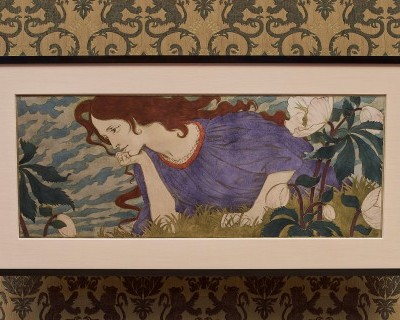
Male Attitudes Toward Women in Late 19th Century Art: Eugène Grasset's Dix Estampes Décoratives
Eugène Grasset's Anxieté has been on view in the Museum as a complement to the exhibition, Theodora Allen: Saturnine. Why Grasset chose to depict this temperament, and why he chose a woman as its embodiment reveals how women were perceived at a moment when they were contesting for their own space in the world.
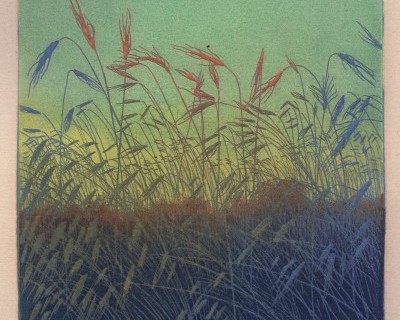
PAN in an International Perspective
With the Museum's purchase of a major collection of 80 prints originally published in the influential magazine Pan, scholar Max Koss reflects on the magnificence of the collection and its significance as a work of cross-cultural artistic exchange at the turn of the last century.
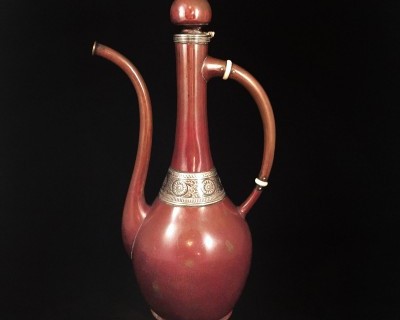
The World in the Nickersons' House: Gorham Manufacturing Company Coffee Pot
This matched set of ‘Turkish’ coffeepots, located in the Sitting Room, are not from Turkey. They were made by the Gorham Manufacturing Company of Providence, Rhode Island in 1882 in the Arabesque style.
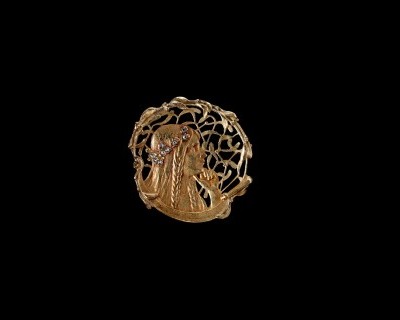
A Look Back at Maker & Muse: Women and Early 20th Century Art Jewelry
Featuring more than 250 stunning works of art jewelry drawn from the collection of Richard H. Driehaus and exemplary national collections, Maker & Muse: Women and Early Twentieth Century Art Jewelry, told the stories of the women who played an integral role in their inspiration and creation.

Goblet Designed by Tiffany & Co. to Honor Andrew Carnegie
This commemorative goblet in the form of a thistle was produced by Tiffany & Company on the occasion of a dinner held in honor of Andrew Carnegie and hosted by the Engineers Club of New York on December 9, 1907.

Designed for the Artistic House
Interiors of the Aesthetic movement, often referred to as artistic interiors, incorporated various historical styles of architecture and decorative arts. The Japanesque – reflecting the influence of the arts of Japan – was particularly in evidence. The Driehaus Museum’s mantel clock, with its Japanesque tiles, embodies the characteristics of an artistic house.

A Tale of Today: Emerging Artists Fellowship - Unyimeabasi Udoh and Alexandria Eregbu
Two of our A Tale of Today: Emerging Artist Fellows, Alexandria Eregbu and Unyimeabasi Udoh, explore the process of presenting their work at the Driehaus Museum.
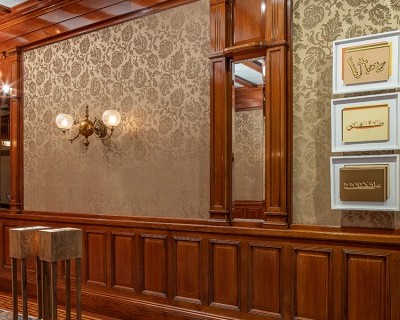
A Tale of Today: Emerging Artists Fellowship - Maryam Taghavi and Devin T. Mays
Two of our A Tale of Today: Emerging Aritst Fellows, Devin T. Mays and Maryam Taghavi, explore the process of presenting their work at the Driehaus Museum.

Teamwork in Art Nouveau Design: Tiffany and Colonna
Though small in scale, this vase has a dramatic presence. It showcases a joint effort between three designers and craftsmen of the late nineteenth century: Louis Comfort Tiffany, who designed the vase, Edward Colonna, who created the mounts, and Eugène Feuillâtre, who enameled the mounts.

A Tale of Today: Up From the Ashes - Pullman Porters and the Great Migration
As a part of the Driehaus Museum’s ongoing mission to expand upon the shaping of Chicago during the Gilded Age through our A Tale of Today: Up From the Ashes series, this Black History Month we look to the Great Migration, the Chicago Defender, the Pullman porters, and the roots of Chicago’s Black working class.

The Origins of Lustreware: Recapping Over Ten Centuries of Aesthetic Pottery
Lustreware has a long history that begins in Mesopotamia and spans the globe. Learn more about English lustreware and the pieces currently on display in the Library of the Driehaus Museum.

A Tale of Today: Up From the Ashes – The Spirit of Giving
The second blog in our A Tale of Today: Up From the Ashes series explores a critical juncture in the city’s history when Chicago’s first philanthropists laid the foundation for the public and cultural institutions we continue to enjoy today.

From Hand to Hearth: The Maher Gallery Fireplace Restoration
Chris Botti and his design studio, having worked on many illustrious art glass restoration commissions in Chicago and beyond, beautifully restored the Nickerson Mansion's Maher Gallery fireplace surround by Giannini & Hilgart. Botti's family story reflects the hard-working immigrant background that allowed Chicago to rise (and dazzle) after the Great Fire.

Reflections on A Tale of Today: Nate Young and Mika Horibuchi
The Driehaus Museum's A Tale of Today: Emerging Artist Fellows reflect on opening of A Tale of Today: Nate Young and Mika Horibuchi at the end of September. The event also marked the launch of the 2020 Fellowship program.

A Tale of Today: Up From the Ashes
Rebuilding Chicago
The first blog in our A Tale of Today: Up From the Ashes series tells the story of the working-class laborers who rebuilt Chicago after the Great Fire of 1871. This blossoming era of industry and creativity came hand in hand with widespread class struggles, strikes, and riots as workers fought to assert their rights and to improve their lives in the growing metropolis.

A Tale of Today: Up From the Ashes
An Introduction
In the wake of the devastation wrought by the Great Fire of 1871 a new Chicago began to rise. While names of the architects and civic leaders of Gilded Age Chicago are well known, this blog series highlights the history of working-class Chicago and tells the stories of those whose work allowed a new city to rise from the ashes of the old.

Greater Together - Curating A Tale of Today: Nate Young and Mika Horibuchi
A Tale of Today: Nate Young and Mika Horibuchi curator, Kekeli Sumah, reflects on putting together our current exhibition particularly at this moment in time.

The Nickerson Series: John Gardner Low
When the Nickersons commissioned their Chicago mansion, Low Art tiles, founded by John Gardner Low, were featured prominently throughout the interior decoration.

The Nickerson Series: George Washington Maher
Visitors often cite the Maher Gallery as their favorite space in the Museum. It is the only room in the mansion that was altered in 1901 when the second owner Lucius George Fisher, Jr. hired George Washington Maher to create his trophy gallery. Maher's addition included the room's impressive stained-glass dome and lacquered cherry bookcases for Fisher's rare book collection. A massive wood-burning fireplace was installed and decorated with an Art Nouveau glass mosaic mantle facing of iridescent, opalescent and metallic luster glass.

The Chap-Book: Chicago’s “Little” Magazine (1894-1898)
The Chap-Book followed in the tradition of the cheap small pamphlets or book of tales, short stories, ballads, poems, illustrations, and advertisements sold on the street of most significant cities in England and France since the eighteenth century. But it was also more...

The Nickerson Series: William August Fiedler
While Burling and Whitehouse were the architects for the Nickerson’s home (built from 1879-1883), the elaborate interiors were the combined work of the highly skilled Chicago-based designers R. W. Bates & Co. and August Fiedler, along with some work by George A. Schastey & Co. Fiedler’s impeccable attention to the smallest elements of style shine in the marble and woodwork throughout the Nickerson Mansion.

The Nickerson Series: Edward J. Burling
Edward J. Burling was, arguably, the first great architect in Chicago – a city of great architects. Along with his partner Francis M. Whitehouse, he was also the architect of the Nickerson Mansion.

Victorian Parlor Games & Puzzles for a Pandemic
Parlor (or parlour) games were popular during the Victorian era in Great Britain and the United States. Many of the games involved logic, word-play, dramatics, and simple creativity without the use of any equipment that would not be readily available in the parlor. Feel free to throw on your best hat, make some tea and finger sandwiches, and unplug from the 21st century for a while with a parlor game…it’s great fun!

A Tale of Today: Emerging Artists Fellowship - Darrell McKinney and Luis Rodríguez Rosario
The Driehaus Museum has launched A Tale of Today: Emerging Artists Fellowship as a two-year pilot program that will engage with four Chicago-based artists of color each year to promote their careers and expand their networks using the Museum’s resources and its home, the Nickerson Mansion, as a springboard. Learn a little more about two of the Fellows in our inaugural class, Darrell McKinney and Luis Rodríguez Rosario.

Reflections on Opening Weekend
The Driehaus Museum's A Tale of Today: Emerging Artist Fellows reflect on the events of the opening weekend of A Tale of Today: Yinka Shonibare CBE, four months ago. The event marked the museum's inaugural contemporary art exhibition and the announcement of the Fellowship.

A Tale of Today: Emerging Artists Fellowship - Brittney Leeanne Williams & Jeffly Gabriela Molina
The Driehaus Museum has launched A Tale of Today: Emerging Artists Fellowship which engages with four Chicago-based artists of color each year to promote their careers and expand their networks using the Museum’s as a springboard. Learn a little more about two of the Fellows in our inaugural class, Jeffley Gabriella Molina and Brittney Leeanne Williams.
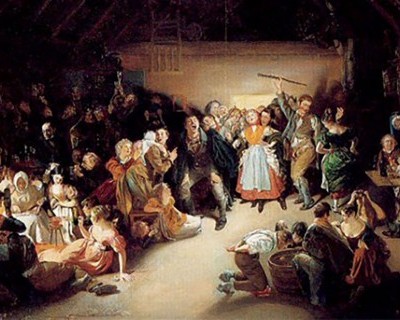
Halloween: From Ancient Britain to Gilded Age America
Although people around the world view Halloween as a thoroughly American holiday, it has a far more complicated story than that. In fact, Halloween is a mash-up of ancient Celtic paganism, early Roman Catholicism, nineteenth-century American immigration, modern suburbanism and commercialism, and much, much more.
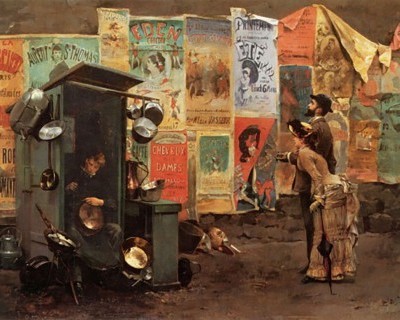
Poster Maniacs: Collectors of the Belle Époque
The Belle Époque posters adorning the galleries of the Driehaus Museum right now shouldn’t, by all rights, exist. They are more than a century old, printed on flimsy paper, with inexpensive inks. Some were once even displayed outside, where the wind, rain, and sun of Paris in its various seasons beat down on them.
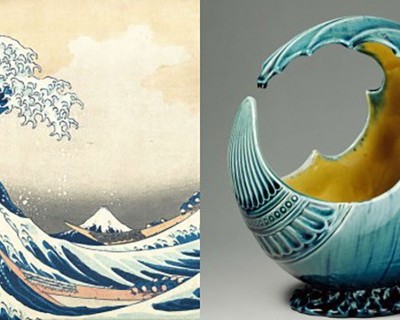
Japonisme
In 1853, an event in the world of foreign relations and commercial trade transformed Western art forever: Japan opened its borders. Wares from this once heavily isolated island in the Far East began to flow into Europe for the first time since 1633.

The Poster Evolution
In Paris in the nineteenth century, Jules Chéret and the other grand masters of the lithographic poster—Alphonse Mucha, Théophile-Alexandre Steinlen, Eugène Grasset, and Henri de Toulouse-Lautrec—took the medium from mere informational advertising to high art, causing the medium’s popularity to skyrocket.
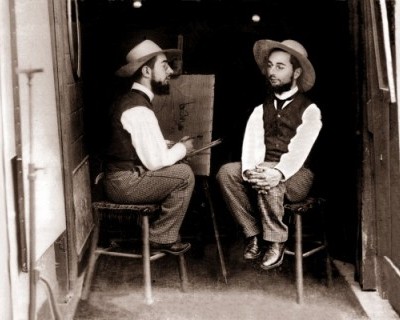
Tragedy & Brilliance: The Life of Henri de Toulouse-Lautrec
There is perhaps no other artist as closely associated with Paris’s ‘Beautiful Age,’ the Belle Époque, than Henri de Toulouse-Lautrec. His art of the late 19th century captured the colorful whirlwind of a raucous, modernizing city, from raunchy cabaret promotions to provocative brothel scenes. He was drawn to the avant-garde performers and prostitutes at very edge of society; an outsider himself, his own experiences informed his subjects.
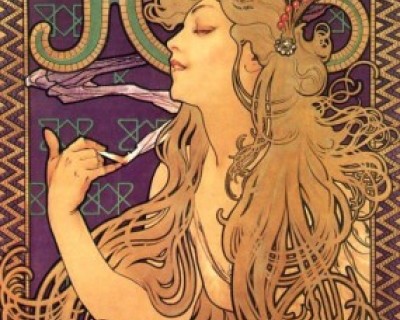
The Sensuous Smoker
This poster for Joseph Bardou Company, or JOB, a Parisian manufacturer of cigarette papers, unabashedly celebrates the sensuous delights of smoking. The young woman’s eyes are closed with pleasure as the lighted cigarette sends a smoky arabesque curving around the image. Her hair cascades around her shoulders and arms, dominating the picture frame. Her white dress, low-cut and gently loose around her body, communicates a freedom only a few women would have enjoyed in the 1890s.
Jules Chéret and the History of the Artistic Poster
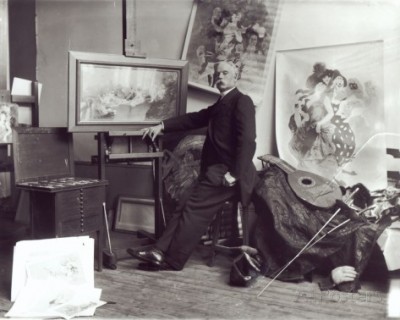
The history of the poster starts with black-and-white broadsides in the 1600s, which evolved in the wake of the printing press.
‘Divine Sarah’: The Great Star of the French Poster
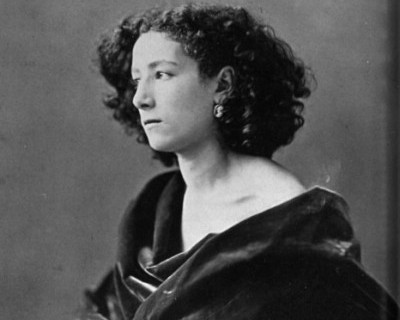
Young and stunning, with sculpted eyebrows and a head of rich brunette curls, French actress Sarah Bernhardt first captured the ardor of Paris’s theatre-going elite in the 1870s. The rest of the world’s attention inevitably followed. Admiring critics, resorting to poetic metaphor, likened her voice to pure gold, a nightingale, silver dawn, the stars and moon, and murmuring water.
Gilded Age New Year’s Traditions: Champagne and Celebrations
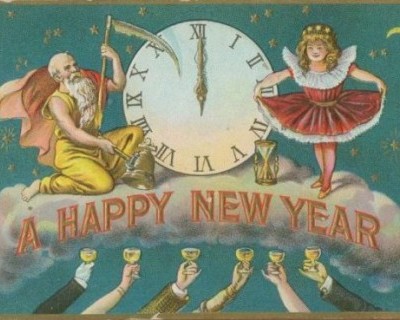
During the Gilded Age, the American traditions of New Year’s Eve started to transition from the folk celebrations of immigrants to the elaborate soirees we are more familiar with today, especially for those of a certain class.
Puck, Anthony Comstock, & the “Suppression of Vice” in Chicago
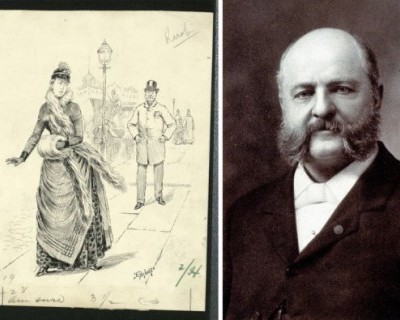
“The object, purpose, and aim in view of the Society and its branches, as set forth in the constitution and in the brief but pointed talk which followed the making of the report, were to put down the vile traffic in obscene books, pictures, etc., by prosecuting those responsible for it either under the Revised Statutes or the State laws. The extent of the evil, which has shown its ugly head with peculiarly refreshing boldness of late, was dwelt upon to some extent, and the movement met with the unqualified moral and financial support of all present. The constitution was unanimously adapted…”